Bank Impersonation Scams & OTP Account Takeover
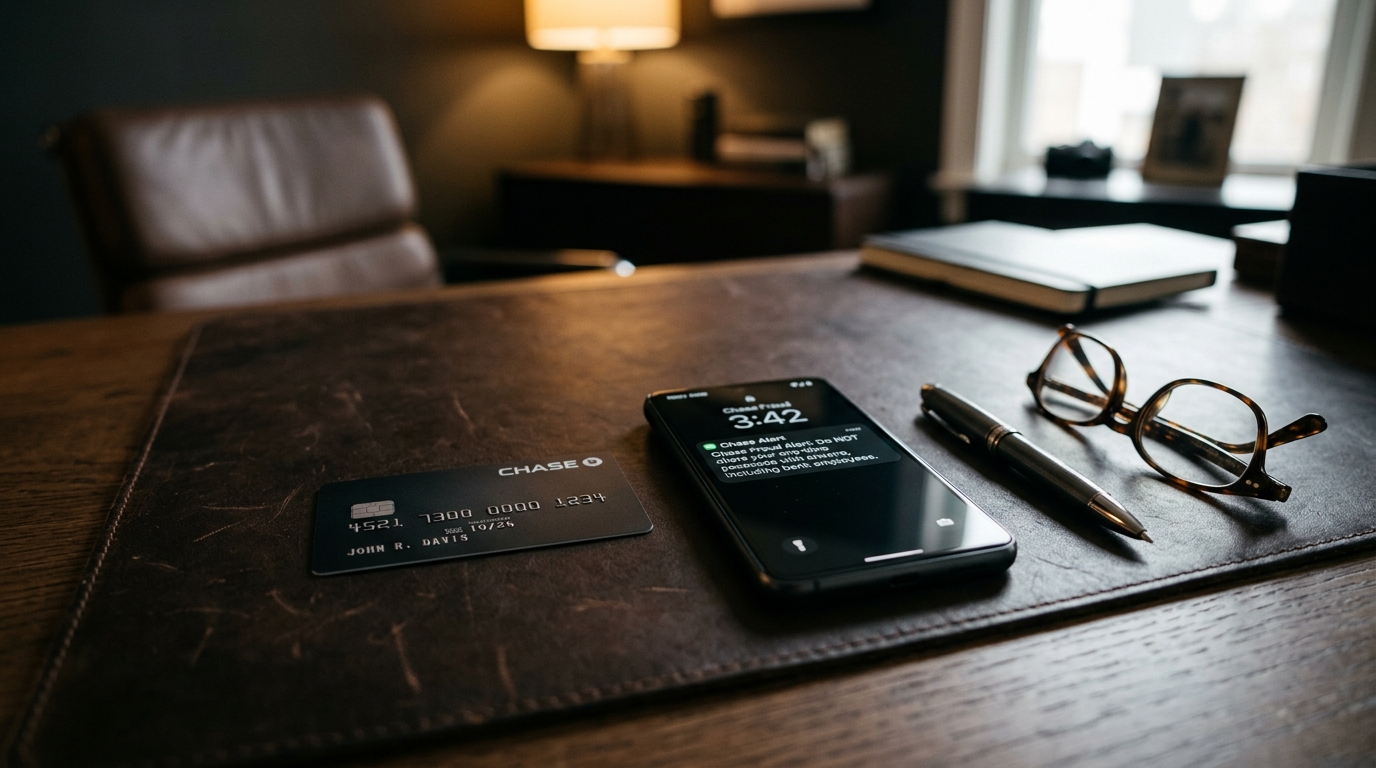
Quick Answer
A bank impersonation scam is a fraud scheme where scammers spoof your bank's fraud department, claim an unauthorized wire is pending, and ask for a one-time passcode to 'cancel' it. Handing over the passcode authorizes the theft. Real banks never ask for one-time passcodes over incoming calls.
A bank impersonation scam is a fraud scheme where scammers spoof your bank's fraud department, claim an unauthorized wire is pending, and ask for a one-time passcode to 'cancel' it. Handing over the passcode authorizes the theft. Real banks never ask for one-time passcodes over incoming calls.
How Bank Impersonation and OTP Interception Work
Bank impersonation fraud is one of the fastest-growing and most financially devastating forms of voice fraud. Scammers combine caller ID spoofing with psychological panic to trick account holders into authorizing fraudulent wire transfers.
The scam unfolds in three calculated steps:
- The Fake Fraud Alert: The victim receives an urgent call or SMS displaying their bank's real name and customer service number on caller ID. The caller claims to be an investigator from the bank's fraud department, warning that an unauthorized wire transfer or Zelle transaction of thousands of dollars is currently pending (learn how reimbursement rules apply in our analysis of getting money back from Zelle scams). In related payment card schemes, callers target security codes; see our breakdown on card compromised scam calls and CVV theft.
- The Verification Trap: The scammer offers to "cancel the fraudulent transaction" or "reverse the charge." To do so, they state that the bank has sent a secure verification code to the customer's phone and instruct the customer to read it aloud to confirm their identity.
- Account Takeover: In reality, the scammer has already initiated an unauthorized transfer or password reset on the victim's online banking portal. The code sent by the bank is not a cancellation code—it is the one-time passcode (OTP) required to authorize the transaction. The moment the victim reads the code, the funds are transferred into the criminal's account. Targeted numbers are often selected through public databases, as explored in our guide on how to know if your number is targeted by spammers.
Voice-based impersonation tactics are broken down in detail in our glossary guide to vishing voice fraud. For long-con schemes that transition from cold calls to fake trading platforms, see our analysis of pig butchering crypto investment scams.
What a Real Bank Will Never Ask You on the Phone
Financial institutions enforce strict security protocols regarding customer authentication:
- Banks never ask for one-time passcodes over the phone: One-time security codes sent to your phone are strictly for your personal use when logging in or making transactions. A bank agent will never ask you to read back a verification code over an incoming call.
- Banks never ask for your PIN or online password: Legitimate customer service agents have internal authentication tools and never require your secret PIN or banking password.
- Banks never instruct you to transfer money to "safe accounts": If an account is genuinely compromised, the bank freezes the account internally—they never tell you to wire funds to a third-party account or peer-to-peer app to protect them. Similar payment refund tricks appear in invoice fraud; see our breakdown of the fake PayPal deposit overpayment scam.
For a detailed breakdown of legitimate authentication procedures versus fraudulent scripts, read our comprehensive guide on what bank fraud departments never ask on the phone.
A customer once told our team that after receiving a fake fraud alert, they followed caller instructions to read back a verification code, resulting in immediate unauthorized account drainage. The emotional weight of discovering life savings drained in minutes led to severe personal crisis.
If you or someone you know is experiencing severe distress or crisis following financial fraud, please contact the 988 Suicide & Crisis Lifeline by calling or texting 988 (available 24/7, free, and confidential).
The Hang-Up-and-Verify Protocol
If you receive an urgent call from someone claiming to represent your bank:
- Hang up immediately: Do not engage, and do not trust the name or number displayed on your caller ID.
- Call the verified number on your physical card: Locate your physical debit or credit card and dial the customer service number printed directly on the back. This ensures you are speaking with legitimate fraud department staff.
- Freeze your account if compromised: If you suspect you shared credentials or codes, notify your bank immediately to freeze your online access and debit cards.
- Screen spoofed incoming calls on-device: Callro's Gauntlet Engine (explore Callro features) evaluates incoming calls on-device through on-device verification — including carrier STIR/SHAKEN verification status as reported by Android, behavioral dialing patterns, and number reputation — to drop fraudulent calls before your ringer sounds.
Frequently Asked Questions
Will a bank ever call you asking for a one-time passcode (OTP)?
No. Legitimate banks will never ask you to provide, read back, or confirm a one-time passcode over an incoming phone call. Verification codes are strictly for your own use when authenticating directly.
How do scammers spoof a bank's real phone number?
Scammers use VoIP software to alter caller ID metadata, displaying your bank's legitimate customer service number to deceive you into answering and trusting the caller.
What should you do if you receive an unexpected fraud alert call from your bank?
Hang up immediately without providing any information. Dial the official customer service number printed on the back of your physical debit or credit card to verify whether the alert is real.
Key Takeaways
- Simulated Bank Security Alerts: Scammers initiate a password reset on your bank account, prompting the bank's automated system to send an SMS passcode.
- The Reverse Fraud Claim: Fraudsters call immediately, claiming suspicious transactions occurred and asking you to read back the code to "stop the transfer".
- Account Takeover Finalization: Providing the code gives the attacker immediate access to your online banking portal to drain balances or alter wire settings.
- Inbound Verification Protocol: Treat every inbound banking call as potentially spoofed; hang up and call the number on your physical card.
Protect Your Family Today
Install Callro and give your parents a phone that only rings for real people. 7-day free trial — no payment info required.