Fake PayPal $10,000 Deposit Scam: How Phishing Calls Work
Quick Answer
The fake PayPal deposit scam convinces victims that an accidental five-figure sum (such as $10,000) was credited to their digital wallet or bank account. Operating across both peer-to-peer marketplaces and inbound call campaigns triggered by bogus email invoices, scammers use fabricated account summaries and psychological panic to demand refunds before the victim discovers no funds were ever transferred.
The Intersection of Email Phishing and Phone Pressure
The fake PayPal deposit scam represents a hybrid fraud vector that merges digital invoice deception with high-pressure telemarketing psychology. Unlike basic phishing emails that seek to steal login credentials through fake web forms, this scheme is structured to force the victim into an active, high-stress voice call with a live operator.
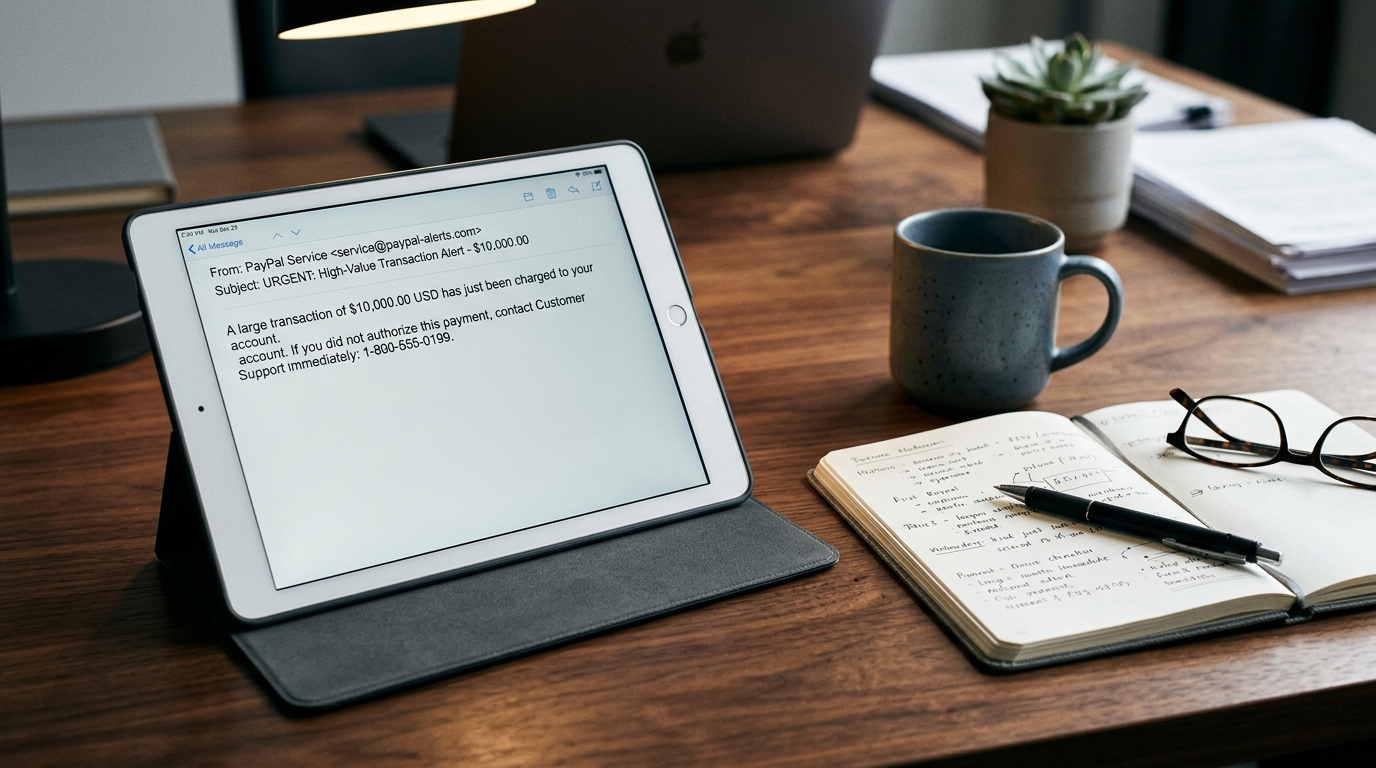
The scam typically begins with an official-looking email notification appearing to originate from PayPal, Geek Squad, Norton, or Bitcoin Exchange. The email details a pending invoice or confirmation of an accidental account credit—often totaling an alarming figure like $10,000. Displayed prominently in the message is a bold, urgent customer service callback number: "If you did not authorize this transaction, contact our fraud resolution team immediately at 1-800-XXX-XXXX."
The Anatomy of the Phone Confrontation
When an alarmed consumer dials the toll-free number, the call connects to an overseas boiler room configured specifically to manage inbound refund calls. The operator executes a multi-step psychological manipulation:
- Establishing Fake Professionalism: The agent greets the caller with standard corporate support greetings, confirms the bogus invoice ID, and validates the consumer's name.
- The Accidental Refund Illusion: The operator instructs the consumer to verify their balance, claiming they are issuing a $100 cancellation credit. The operator uses psychological framing and manipulated balance statements to convince the victim that $10,000 has been credited in error.
- The Simulated Catastrophe: The operator abruptly shifts to intense emotional distress, crying that a clerical error credited $10,000 instead of $100, pleading that they will face severe personal and legal penalties unless the extra funds are wired back immediately.
As explored in our analysis of Zelle and peer-to-peer refund scams, scammers rely on manufactured panic to compel victims to authorize real outgoing payments before checking verified bank statements.
Why the Scam Operates Across Multiple Channels
This fraud architecture is not confined to email lures. Telemarketing syndicates also initiate cold outbound calls to prospective victims, claiming an unauthorized $10,000 merchant transfer is currently pending on their digital wallet. When the consumer denies making the purchase, the operator pivots directly into the bogus cancellation and refund protocol.
Similarly, in peer-to-peer online marketplaces (such as Facebook Marketplace or Craigslist), buyers send fake PayPal payment screenshots showing an accidental overpayment, demanding that the seller refund the difference via wire transfer or gift cards before shipping any merchandise.
The Critical Rule for Digital Payment Verification
Protecting yourself and your family from payment gateway deception requires adhering to strict operational discipline:
- Never Call Numbers on Unsolicited Invoices: Phone numbers embedded in unexpected email notifications, text messages, or invoices connect directly to scam operators.
- Independent Portal Verification: Always verify transaction status by navigating directly to official service websites (e.g., typing PayPal.com into a clean browser tab) or opening official mobile banking apps.
- Zero Remote Screen Sharing with Unknown Callers: Legitimate customer support representatives from banks and payment platforms will never request remote desktop or screen sharing access to issue refunds.
As detailed in our report on bank impersonation and OTP account takeover, allowing unauthorized callers to guide your banking interactions exposes your accounts to severe financial losses.
For comprehensive mobile protection, deploying Callro's privacy-first call blocker prevents predatory callback syndicates and cold telemarketers from reaching your personal device.
Frequently Asked Questions
How does the fake PayPal $10,000 deposit scam work?
Scammers send a fake invoice notification claiming an unauthorized charge or accidental deposit occurred on your account. When the victim calls the toll-free support number listed, the operator uses social engineering to simulate an accidental $10,000 balance credit, aggressively demanding an immediate refund.
Do scammers use phone calls or emails to deliver this scam?
Both. The attack frequently originates as an authentic-looking email invoice containing an urgent customer service callback number, transitioning to an aggressive telephone conversation once the victim calls the number.
What should you do if an invoice claims you received an accidental deposit?
Never call phone numbers listed in unexpected emails or invoices. Open a separate web browser, navigate directly to PayPal.com or your banking portal, and verify your actual transaction history independently.
Key Takeaways
- Multi-Channel Attack: Fraudsters send a fake billing notification email containing a phone number, prompting victims to call an adversarial call center.
- Remote Access Demands: Scammers instruct targets to download remote-access applications or visit specific URLs under the pretense of processing a refund or securing their device.
- The $10,000 Overpayment Illusion: The target sees an altered bank screen showing a massive fake deposit and is pressured to return the difference via gift cards or wire.
- Digital Payment Verification Rule: Never call phone numbers listed inside unsolicited email invoices; verify transaction history directly in official banking apps.
Protect Your Family Today
Install Callro and give your parents a phone that only rings for real people. 7-day free trial — no payment info required.