How to Find Out Who Called You From an Unknown Number
Quick Answer
To find out who called you from an unknown number, search the 10-digit number in quotes on Google, check your mobile carrier's caller ID app, or search public reverse-lookup directories. Never call the number back or pay data-broker subscription fees, as modern scammers routinely spoof innocent local numbers that don't belong to them.
An unexpected missed call from an unfamiliar 10-digit number is one of the most common daily annoyances on modern smartphones. Whether the call disconnects after a single ring or leaves a silent voicemail, human curiosity naturally makes you wonder: Who just called me?
While legitimate reverse phone lookup options exist, searching for an unknown caller requires extreme caution. The search ecosystem for phone numbers is heavily saturated with predatory data-broker paywalls, and telecommunications scammers actively exploit missed calls to ensnare victims.
Here is the objective guide on how to safely research who called you, how to recognize predatory data brokers, and why calling an unknown number back is the worst thing you can do.
1. Legitimate, Free Ways to Look Up an Unknown Number
Before paying a third-party service or downloading questionable software, use these proven, zero-cost investigative steps:
A. The Exact-Match Google Search
When a telephone number belongs to a legitimate business, medical clinic, utility company, or known public entity, standard search engines index it immediately:
- Enter the full 10-digit number wrapped in quotation marks into Google or DuckDuckGo:
"727-555-0194". - Wrapping the number in quotation marks forces the search engine to execute an exact string match rather than returning generic area-code guides.
- If the number is associated with a hospital department, local service contractor, or school district, official web pages will appear at the top of the search results.
- If the number is an active robocaller, the search will surface consumer complaint forums (such as 800notes or WhoCallsMe) detailing the caller's specific sales script.
B. Carrier Caller ID & Spam Lookup Apps
Major wireless carriers maintain verified business identity registries tied directly to telecommunications routing infrastructure:
- AT&T ActiveArmor, T-Mobile Scam Shield, and Verizon Call Filter maintain carrier-grade directories that identify verified commercial callers even if the number is not saved in your personal address book.
- If your carrier's app flags the number with "Spam Likely" or displays an authenticated business name, you can determine who called without exposing your device to third-party tracking.
C. Search Public Directory Databases
For non-commercial landlines and residential listings, free public directories such as the online Whitepages or AnyWho provide basic reverse telephone lookups. If a number is publicly registered in a regional telecommunications directory, these platforms will display the registered city, state, and approximate carrier line type (wireless vs. landline) for free.
2. Why Reverse Lookups Often Fail: The Caller ID Spoofing Trap
If your search returns an ordinary individual's name or shows an unassigned residential number in your town, do not assume that person called you. In modern telephony, the number displayed on your smartphone screen is frequently a lie.
Through Voice over IP (VoIP) software, autodialers routinely execute neighbor spoofing. Scammers falsify their outgoing caller ID to match your local area code and 3-digit prefix, making an international call appear to originate from a neighbor down the street.
Under the Truth in Caller ID Act, caller ID spoofing is illegal when done with intent to defraud or cause harm. However, overseas call syndicates operate outside US borders and ignore statutory penalties. When you look up a spoofed number, you are researching an innocent person whose phone number was hijacked as a temporary mask.
3. What NOT to Do When You Receive an Unknown Call
When dealing with unfamiliar numbers, avoiding dangerous mistakes is just as critical as finding the caller's identity:
Never Call the Number Back
Calling back an unknown missed call exposes you to two major risks:
- The Wangiri (One-Ring) Fraud Trap: In our detailed breakdown of the one-ring phone scam, scammers program dialers to ring once and hang up, using numbers that appear domestic but are actually premium-rate international lines (such as area code 876 or 473; see our guide on what area codes most spam calls come from). Calling back connects you to an expensive toll service billed at exorbitant rates.
- Confirming an Active Human Line: When an autodialer dials your number, it tests whether the line connects to an active recipient. If you call back, the dialer's software automatically flags your number as a "verified responder," multiplying the volume of future spam calls you receive.
Never Press Numbers to "Unsubscribe" or "Opt Out"
If you answer an unknown call and a recorded voice instructs you to "Press 1 to speak with an agent" or "Press 9 to be placed on our Do Not Call list," hang up immediately. In illegal robocall architectures, pressing any button simply confirms that a live human is holding the phone. It does not remove your number; it verifies your line for resale across autodialer networks.
Never Pay $30 to a "People Search" Website
The most common trap awaiting consumers who search phone numbers online is the predatory data-broker funnel. Commercial people-search websites advertise "100% Free Reverse Phone Lookups." After making you wait through simulated "progress bars," the site locks the caller's identity behind a "$1.00 Trial Offer."
Once you provide payment information, the fine print enrolls you in an automatic recurring membership billing $29.99 to $39.99 every month. Worse, the records provided by these brokers are often years out of date, listing previous owners of recycled mobile numbers. Never pay a data broker to identify a suspicious caller.
Avoid Installing Crowdsourced Caller ID Apps That Upload Your Contacts
When looking for caller identification, many users install crowdsourced directory apps. However, as documented in our security review of whether Truecaller is safe for contact privacy, crowdsourced directory platforms frequently upload and index your private address book to remote servers to build their global search directories. Sacrificing your personal contacts and your family's privacy is an unacceptable price for looking up an unknown caller.
4. How On-Device Call Screening Eliminates the Unknown Caller Problem
Instead of spending time researching unfamiliar numbers after they ring, modern mobile security stops unwanted callers automatically.
Traditional blockers rely on centralized cloud reputation lists that update hours or days after a scammer begins calling. By contrast, on-device call screening leverages Android's native ROLE_CALL_SCREENING framework to inspect incoming calls directly on your handset before your ringer activates.
When an unknown number calls a device running Callro:
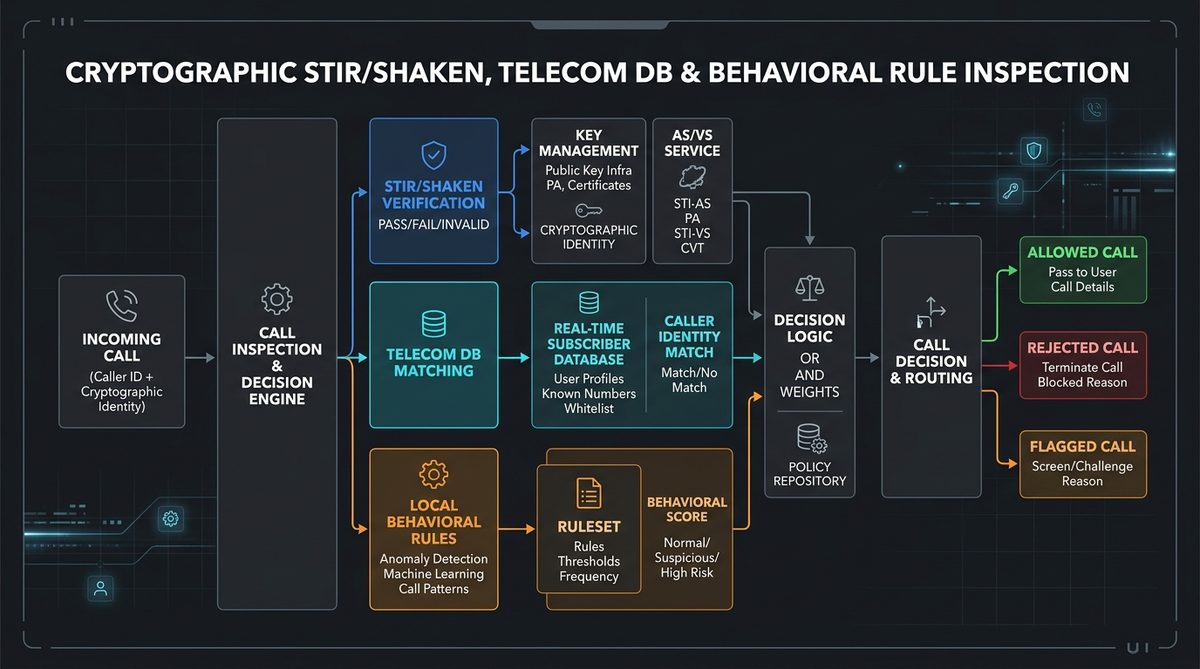
- Carrier Verification: Callro's Gauntlet Engine reads the carrier's STIR/SHAKEN verification status (Passed, Failed, or Unverified) as reported by Android directly from the call signaling metadata.
- Telephony Heuristics: The on-device engine inspects originating VoIP routing headers and neighbor-spoofing signatures.
- Call blocking: Callro blocks or silences the call, so your phone does not ring.
- Privacy Protection: All screening executes locally on your phone's processor. Personal contacts, call history, and private records remain on your device.
Frequently Asked Questions
Can I find out who called me if they blocked their caller ID?
If a caller hides their identity using *67 or private caller ID, their number will display as 'Restricted', 'Blocked', or 'Anonymous'. Free reverse-lookup tools cannot unmask a call when no 10-digit number is transmitted across the cellular voice network. However, on-device screening apps can be configured to silence or block all anonymous calls automatically.
Why does a reverse phone lookup show a different person than who spoke to me?
This discrepancy occurs for two reasons: First, under FCC rules (Second Report and Order, FCC 18-177; 47 CFR § 64.1200(l)(1)), mobile carriers observe a minimum 45-day aging period before reassigning disconnected numbers to new subscribers, meaning online databases frequently associate a number with a prior owner. Second, and more commonly, modern robocallers falsify (spoof) their caller ID to display numbers assigned to innocent consumers, meaning the person listed in the directory had no knowledge their number was used.
Is it safe to text an unknown number asking who they are?
No. Texting an unknown number confirms that your mobile line is active and capable of receiving SMS messages. Scammers routinely send vague messages like 'Hey, is this John?' or 'Did you call me?' to initiate smishing conversations or conversational romance/crypto investment schemes (pig butchering). If you do not recognize the sender, delete the message without responding.
What should I do if an unknown caller leaves an urgent voicemail claiming to be from my bank?
Never call the telephone number provided in the voicemail or tap links in follow-up text messages. Hang up, turn over your physical bank debit or credit card, and dial the customer service number printed directly on the back of the card. Legitimate financial institutions will have internal records of any authentic fraud alerts on your account.
Key Takeaways
- Free web searches using exact-match quotes ("###-###-####") often reveal commercial spam reports or business listings without requiring payment.
- Scammers frequently deploy neighbor spoofing, meaning the innocent person whose number appears on your caller ID never actually called you.
- Never call back an unknown missed call; returning calls can confirm active numbers or trigger expensive Wangiri toll-fraud charges.
- Avoid 'people-search' websites that demand trial fees or recurring monthly memberships for publicly available carrier data.
- On-device call screening silences unknown and spoofed calls before your phone rings, eliminating the need to research suspicious numbers.
Protect Your Family Today
Install Callro and give your parents a phone that only rings for real people. 7-day free trial — no payment info required.