What Area Codes Do Most Spam Calls Come From? The Truth
Quick Answer
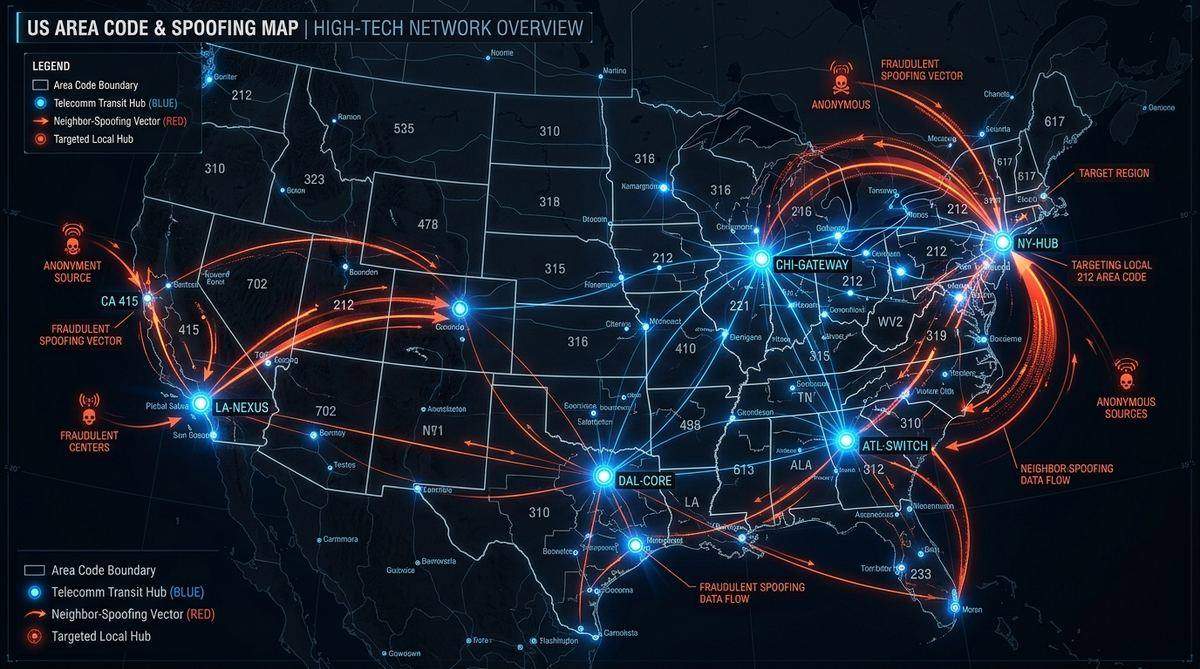
Most spam calls do not originate from a single physical area code; scammers use automated VoIP systems to dynamically spoof your own local area code and exchange (neighbor spoofing) or route calls through high-density telecommunication switching gateways.
Most spam calls do not originate from a single geographic region; instead, automated dialing platforms spoof the recipient's own local area code or route traffic through major telecommunications transit gateways. Because caller ID fields can be manipulated via SIP protocols, the area code displayed on your screen rarely reflects the caller's actual location.
Why Is Your Own Area Code the Most Common Source of Spam?
The single most frequent area code on incoming spam calls is your own. Robocall operations rely on "neighbor spoofing" — an automated technique documented in FCC caller ID spoofing guidance where dialing software matches the first six digits (the 3-digit area code plus the 3-digit local exchange) of the recipient's number to mimic familiar local calls.
Telecommunication studies demonstrate that consumers are significantly more likely to answer an unfamiliar call if it appears to originate from their local neighborhood, school district, or medical facility. For a formal technical definition of this mechanism, see our guide on how neighbor spoofing works.
How Do Autodialers Exploit Telecommunication Transit Gateways?
Rather than registering physical landlines in every state, modern robocallers connect to intermediate wholesale Session Initiation Protocol (SIP) trunking providers. These wholesale gateways allow automated dialers to inject high call volumes per hour into the public switched telephone network (PSTN).
Because VoIP protocols allow the calling entity to populate the "From:" caller ID header field with arbitrary numbers, a dialer operating overseas can broadcast calls displaying any US area code on your device. To examine regulatory actions against unverified gateway traffic, review our detailed report on FTC and FCC robocall statistics.
Why Does Area-Code Blocking Fail to Protect Your Phone?
Many legacy call-blocking applications offer "wildcard" or area-code blocking filters that reject all incoming calls from specific 3-digit prefixes. In modern networks, this approach creates severe operational problems:
- High false-positive rates: Blocking your local area code blocks legitimate calls from doctors, pharmacies, utility companies, and neighbors.
- Zero protection against rotating numbers: Scammers rotate through multiple different area codes within a single afternoon using automated SIP scripts.
How Do Cryptographic Protocols Defeat Area Code Spoofing?
The telecommunications industry developed the STIR/SHAKEN governance framework to eliminate unverified caller ID manipulation. Under this system, originating carriers cryptographically sign each call with an Attestation Level (A, B, or C) indicating whether the caller is authorized to use the displayed area code.
Modern on-device call screening reads the carrier's STIR/SHAKEN verification status as reported by Android, and can block or silence flagged calls so the device does not ring. To learn how attestation tokens are verified on your device, read our guide on neighbor spoofing and STIR/SHAKEN attestation.
Frequently Asked Questions
Why do so many spam calls come from my own area code?
Scammers use a technique called neighbor spoofing, programmatically generating caller ID numbers that share your local 3-digit area code and 3-digit exchange to trick you into believing a neighbor or local business is calling.
Can you stop spam by blocking entire area codes?
No. Blocking entire area codes is largely ineffective because modern VoIP platforms dynamically generate fake caller IDs across all North American area codes on your device, while risking blocking legitimate local services.
Why does the displayed area code rarely match the caller's physical location?
Under Session Initiation Protocol (SIP) VoIP standards, originating callers can insert arbitrary phone numbers into the caller ID header unless the originating carrier enforces cryptographic STIR/SHAKEN authentication.
How does STIR/SHAKEN prevent area code spoofing?
STIR/SHAKEN requires originating telephone carriers to cryptographically sign caller ID tokens, verifying whether the calling party has the legal right to use the transmitted area code and number.
Key Takeaways
- Autodialers frequently spoof numbers matching high-population metropolitan exchanges to mimic local business traffic.
- International one-ring scam campaigns spoof foreign area codes to induce expensive toll call-backs.
- Autodialers prioritize neighbor spoofing matching your local area code over distant prefixes.
- On-device screening detects origin spoofing regardless of which area code is displayed.
Protect Your Family Today
Install Callro and give your parents a phone that only rings for real people. 7-day free trial — no payment info required.