Why Press-1 Robocalls Are Dangerous: How It Works
Quick Answer
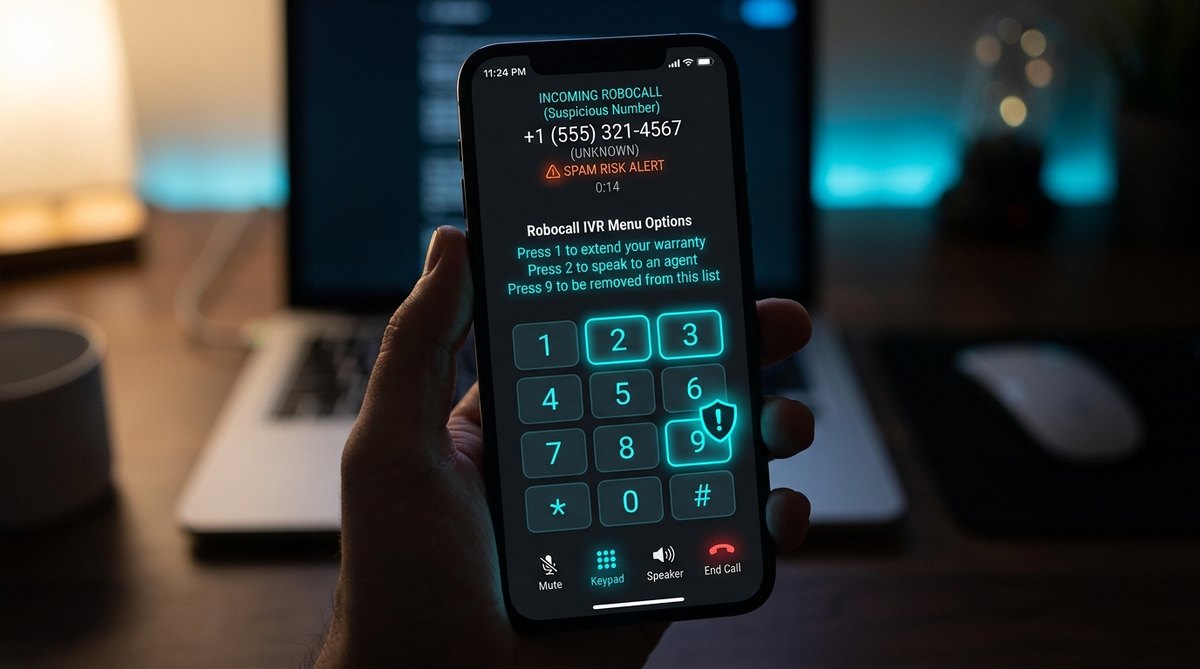
Press-1 robocall scams are automated interactive calls that prompt you to press a button to dispute a fake purchase, lower interest rates, or speak to support. Pressing 1 confirms your number is active and routes you to a live fraudster. Never press any buttons—simply disconnect immediately.
Press-1 robocall scams are automated interactive calls that prompt you to press a button to dispute a fake purchase, lower interest rates, or speak to support. Pressing 1 confirms your number is active and routes you to a live fraudster. Never press any buttons—simply disconnect immediately.
How Press-1 Robocall Campaigns Work
Automated Interactive Voice Response (IVR) systems allow cybercriminals to dial phone numbers simultaneously over the internet at low marginal cost. Rather than paying live agents to dial non-working or unanswered numbers, scam operations use automated pre-recorded robocalls to filter for responsive targets.
The call typically presents an alarming or urgent scenario:
- Fake Purchase Alerts: A synthetic voice claims an expensive order (such as an iPhone or gaming console) was placed on your retail account and prompts you to "press 1 to cancel the charge."
- Financial Impersonation: The recording warns that your bank account or credit card was flagged for suspicious activity and instructs you to press 1 to reach the fraud department. High-volume autodialing pretexts are explored further in our guide on why spam calls target specific numbers.
- Government Imposters: Calls claim your tax filing or Social Security status is suspended, directing you to press 1 to speak with an investigator. Similar account takeover tactics are analyzed in our breakdown of bank impersonation and credential theft.
Why Pressing 1 Multiplies Your Spam Call Volume
The moment you press 1 on an automated robocall, two things happen immediately:
- Instant Transfer to Live Fraudsters: Your call is immediately patched through to an offshore boiler room where high-pressure scammers attempt to extract banking credentials, credit card details, or remote device access.
- Line Verification and List Escalation: Automated dialers flag your phone number as a "confirmed live and responsive lead." That verified status is immediately recorded in autodialer databases and resold across illicit marketing registries, dramatically increasing the number of spam calls you receive in subsequent weeks.
FCC Enforcement: The SK Teleco Cease-and-Desist
Federal Communications Commission (FCC) enforcement actions have targeted gateway providers for transmitting illegal robocall campaigns. These automated campaigns have utilized synthetic AI voices falsely warning consumers of unauthorized retail charges and bank fraud alerts to induce immediate button presses.
Federal regulators emphasized that high-volume interactive robocalls remain the primary mechanism criminal syndicates use to generate live victim transfers.
What to Do If You Receive a Press-1 Robocall
To protect your identity and keep your phone number off verified dialer lists:
- Hang up immediately: Do not press 1 to dispute the charge, and do not press any other number to "unsubscribe" or "opt out." As emphasized in FTC robocall consumer advice, any keypad interaction confirms your number is active and leads to more calls.
- Verify independently: If a recording claims an unauthorized charge occurred on your Amazon, Walmart, or bank account, open the official app or website directly to review your transactions.
- Report the call: Submit details to the FCC Consumer Complaint Center at consumercomplaints.fcc.gov and ReportFraud.ftc.gov.
- Screen incoming calls on-device: Callro's Gauntlet Engine (explore Callro features) evaluates incoming calls on-device through on-device verification — including carrier STIR/SHAKEN verification status as reported by Android, behavioral dialing patterns, and number reputation — to drop fraudulent calls before your ringer sounds.
Frequently Asked Questions
What happens if you press 1 on a scam robocall?
Pressing 1 transfers your call to a live scammer and marks your phone number as active in automated dialing databases, significantly increasing future spam call volume.
Does pressing a button to 'opt out' of spam calls work?
No. On illegal robocalls, pressing buttons to opt out does not remove your number. Instead, it confirms to the autodialer that a human answered, making your number more valuable on spam lead lists.
How can you tell if a purchase alert call is real?
Hang up immediately and check your official banking or retail account directly through their official app or website. Real merchants will never require you to press 1 on an unverified incoming call.
Key Takeaways
- Interactive Voice Response (IVR) Filtering: Autodialers broadcast automated audio prompts asking victims to "Press 1" to connect or opt out.
- Pressing 1 Multiplies Harassment: Pressing any key signals to the predictive dialer that the phone number is active and monitored, increasing future scam calls.
- High-Priority Transfer to Closers: Key presses route immediately to live boiler room closers trained in aggressive high-pressure financial extraction.
- Zero-Interaction Protocol: When an automated robocall connects, hanging up immediately without pressing any keys or speaking is the safest defense.
Protect Your Family Today
Install Callro and give your parents a phone that only rings for real people. 7-day free trial — no payment info required.