How Do Robocall Blockers Identify Spam Calls?
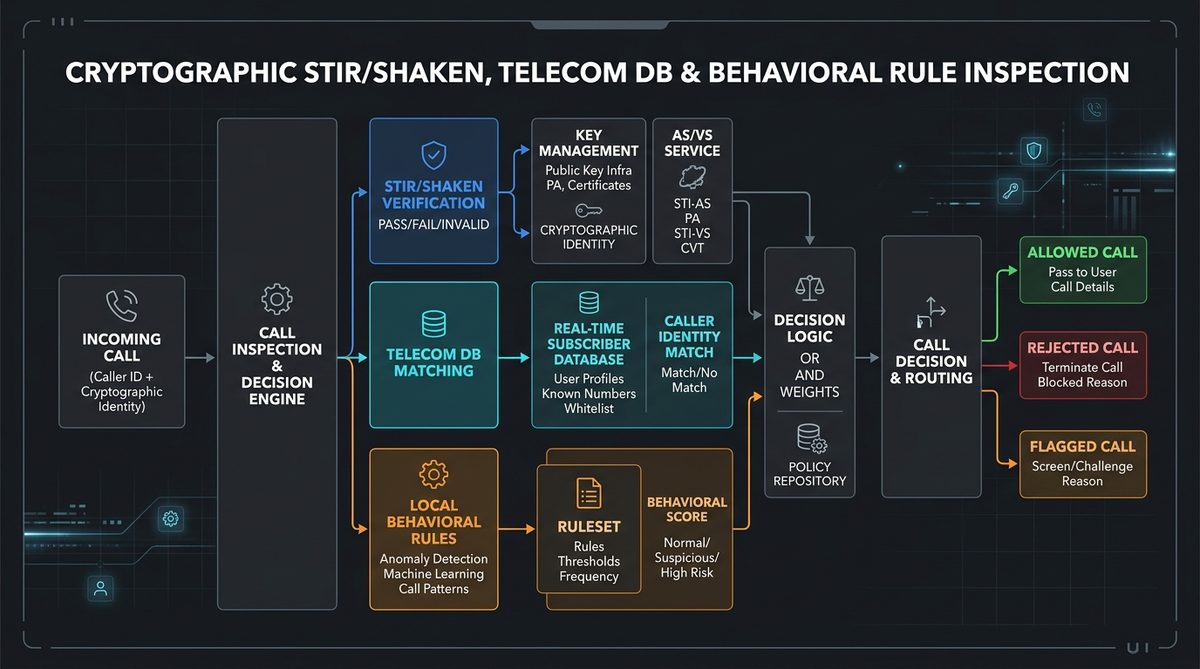
Quick Answer
Modern call blockers identify spam through multiple deterministic mechanisms: cryptographic STIR/SHAKEN caller authentication, telecom blocklist database matching, and on-device behavioral heuristics that evaluate call frequency, area code validity, and exchange patterns.
Modern robocall blockers identify unsolicited calls through multiple deterministic layers: cryptographic caller authentication via STIR/SHAKEN, multi-source telecom database matching, and local behavioral heuristics that inspect incoming call metadata on your device.
1. Cryptographic Authentication: STIR/SHAKEN Verification
The primary foundation of modern call validation is the STIR/SHAKEN framework. When an originating telephone service provider receives a call request, it generates a digital SIP identity token signed with a private cryptographic key. The receiving carrier verifies this certificate and assigns an Attestation Level:
- Full Attestation (A): The carrier verified the caller's identity and confirmed their legal right to use the specific phone number.
- Partial Attestation (B): The carrier verified the customer placing the call, but cannot verify if they own the specific telephone number displayed.
- Gateway Attestation (C): The call originated from an international gateway or third-party transit network with zero identity verification.
Call screening engines inspect these attestation flags to immediately route unauthenticated calls into deeper inspection layers. For a complete analysis of these multi-stage filters, explore how on-device protection layers operate.
2. Telecommunications Database & Blocklist Matching
The second identification mechanism relies on synchronized telecommunications blocklists compiled from regulatory enforcement databases, carrier feeds, and verified spam reports. Numbers associated with known fraudulent campaigns or high-velocity autodialer sweeps are flagged for instant rejection.
To prevent latency, advanced on-device blockers store compact, hashed representations of these high-risk number blocks directly on the phone, eliminating the need to query remote servers during incoming calls.
3. On-Device Behavioral Heuristics
Because scammers generate fresh spoofed numbers continuously, static blocklists alone are insufficient. On-device screeners apply deterministic behavioral rules to incoming metadata:
- Exchange Validity: Checking if the incoming area code and central office code correspond to valid North American Numbering Plan (NANP) allocations.
- Velocity & Pattern Matching: Evaluating whether the caller ID fits algorithmic spoofing patterns (such as sequential digit rotations).
- Contact List Exemption: Calls from contacts stored in your phone's native address book ring directly through Android without reaching screening apps.
To learn how these rules run deterministically across all incoming calls, review the architecture of the Callro Gauntlet Engine.
How Do System APIs Execute Instant Call Blocking?
In modern Android architecture, call screening executes within the operating system via the native Android ROLE_CALL_SCREENING subsystem. When a call arrives, Android provides the call metadata to the designated screening service.
The screening engine completes analysis on your device, commanding the system to allow, silence, or block the call. When Callro blocks or silences a call, your phone does not ring. All analysis occurs locally; Callro does not request access to your contacts, your phone's call log, or your microphone.
Frequently Asked Questions
How does STIR/SHAKEN help identify spam calls?
STIR/SHAKEN attaches a digital cryptographic certificate to incoming calls. Call screeners read this verification status to check if the originating carrier authenticated the caller's identity (Attestation A) or if the number is unverified (Attestation B/C or missing).
What behavioral rules do call blockers use?
Behavioral heuristics evaluate incoming call parameters locally — such as whether a number dials multiple lines in rapid succession, matches unassigned exchange blocks, or uses suspicious sequential digit patterns.
Do modern call blockers listen to call audio?
No. On-device call screeners on unrooted Android evaluate SIP metadata, caller ID headers, and carrier attestation without recording or listening to call audio.
How long does Android give a call screening app to decide?
While a screening app responds, Android holds the incoming call and does not ring it, for up to a short time limit set by Android. If the app does not respond in time, the call rings normally.
Key Takeaways
- Blockers evaluate STIR/SHAKEN attestation, prefix velocity bursts, and carrier routing headers.
- Crowdsourced apps rely on lagging user reports, missing newly minted burner numbers.
- On-device behavioral heuristics evaluate call legitimacy immediately without network queries.
- Local processing ensures private address books are never uploaded or analyzed externally.
Protect Your Family Today
Install Callro and give your parents a phone that only rings for real people. 7-day free trial — no payment info required.