What Is ROLE_CALL_SCREENING? The Android API That Blocks Calls Before Your Phone Rings
ROLE_CALL_SCREENING is an Android system role that grants an app the ability to intercept incoming calls before the device rings, analyze the caller, and decide whether to allow, silence, or reject the call — all without the user seeing or hearing anything.
Quick Answer
Android's ROLE_CALL_SCREENING is a privileged system API that allows designated call blocker apps to inspect incoming call metadata\u2014such as phone numbers and STIR/SHAKEN verification\u2014directly on your device. It enables the app to reject, silence, or allow incoming calls before your ringer ever sounds.
How It Works: The Technical Sequence
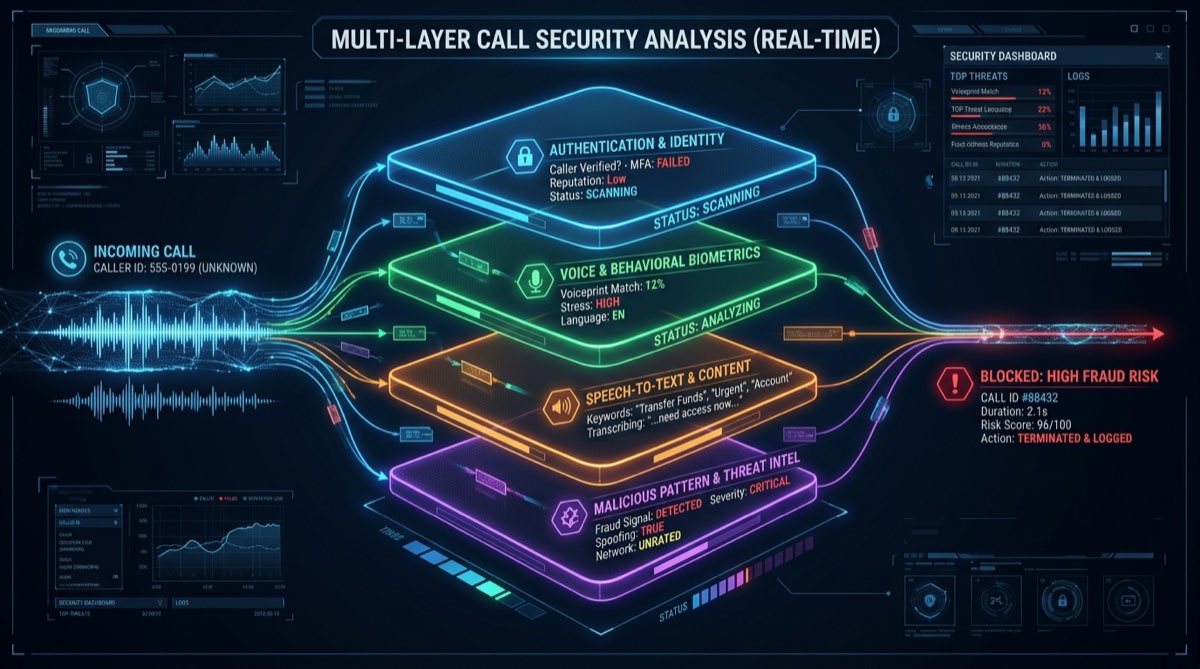
When a call arrives at an Android device where an app holds the ROLE_CALL_SCREENING role, Android invokes that app's CallScreeningService before presenting the call to the user. The sequence:
- Call intercepted. Android intercepts the incoming call and invokes
onScreenCall(Call.Details)on the app'sCallScreeningService. - Metadata delivered. The
Call.Detailsobject contains the caller handle (number), STIR/SHAKEN verification status, and call direction. No audio is provided at this stage. - Analysis runs on-device. The app analyzes the caller's number against its on-device engine — behavioral patterns, number intelligence, historical signals, blocklist matching.
- Response returned. The app calls
respondToCall(CallResponse)specifying: allow the call, reject it, or suppress the caller ID notification. - Decision enforced by Android. Android enforces the response. When Callro blocks or silences a call, your phone does not ring. The user never sees it.
STIR/SHAKEN Verification Status in CallScreeningService
One of the key signals available to a CallScreeningServiceimplementation on Android 10 and newer is the carrier's STIR/SHAKEN verification status as reported by Android. On Android 10, the other on-device checks still run while verification status falls back to unverified. While carriers generate cryptographic A, B, or C attestation levels at the network layer, Android's call screening API does not expose the A, B, or C level; it reports only whether the network verified the number (Passed, Failed, or Unverified):
| Level | Meaning | Risk Signal |
|---|---|---|
| A — Full Attestation | Carrier verified the caller owns the number | Low |
| B — Partial Attestation | Carrier verified the call origin, not number ownership | Medium |
| C — Gateway Attestation | Call entered the network from an unknown source | High |
| No Attestation | Call lacks any STIR/SHAKEN signature | Very High |
Callro reads the carrier's STIR/SHAKEN verification status (Passed, Failed, or Unverified) as reported by Android as one of its Gauntlet Engine analysis layers. An unverified call entering the on-device pipeline receives elevated scrutiny across all subsequent layers. See What Is the Gauntlet Engine? for the full breakdown.
Developer Implementation: Requesting ROLE_CALL_SCREENING
For Android application developers, obtaining call screening privileges requires requesting the system role programmatically through Android's RoleManager documentation and system service. Unlike standard runtime permissions requested via requestPermissions(), system roles require an explicit user confirmation intent:
val roleManager = getSystemService(Context.ROLE_SERVICE) as RoleManager
if (roleManager.isRoleAvailable(RoleManager.ROLE_CALL_SCREENING)) {
    if (!roleManager.isRoleHeld(RoleManager.ROLE_CALL_SCREENING)) {
        val intent = roleManager.createRequestRoleIntent(
            RoleManager.ROLE_CALL_SCREENING
        )
        startActivityForResult(intent, REQUEST_CODE_CALL_SCREENING)
    }
}
When roleManager.createRequestRoleIntent(RoleManager.ROLE_CALL_SCREENING) executes, Android renders a protected OS-level confirmation prompt asking the user to set the application as their default Caller ID & spam app. Once granted, the operating system routes incoming call events directly to the app's registered CallScreeningService implementation.
Why This API Matters for Privacy
Before ROLE_CALL_SCREENING existed, spam blockers on Android typically used one of two problematic approaches:
- Call forwarding: Route all calls through the app's servers before delivering them to the device. Requires carrier configuration. Every call metadata event is logged by a third-party server.
- Post-ring identification: Allow the call to ring, display a spam label, and let the user decide. The phone still rings. Useless for protecting someone who answers every call.
ROLE_CALL_SCREENING eliminates both problems. The call is intercepted locally before it rings, analyzed on-device, and the decision is made without requiring address book access (see our contacts permission audit). For a deeper look at how this enables privacy-first call blocking, see What Is On-Device Call Screening?
Frequently Asked Questions
What is ROLE_CALL_SCREENING?
Learn how Android's ROLE_CALL_SCREENING role and CallScreeningService API let call blocker apps intercept and analyze incoming calls on-device before your ringer sounds. It is the correct, officially-supported mechanism for building spam call blockers on Android.
What is CallScreeningService?
CallScreeningService is the Android API class that an app implements to screen incoming calls once granted the ROLE_CALL_SCREENING role. When an incoming call arrives, Android invokes the CallScreeningService on the app holding the ROLE_CALL_SCREENING role, passing a Call.Details object containing the caller's number, STIR/SHAKEN attestation, and other metadata. The app must return a CallResponse within the API's deadline, specifying whether to allow or block the call.
When was ROLE_CALL_SCREENING introduced?
The ROLE_CALL_SCREENING system role was introduced in Android 10 (API level 29) as part of the RoleManager system. It replaced the older, more limited approach of registering a CallScreeningService via the manifest. The role-based system ensures only one app can hold the screening role at a time and requires explicit user consent.
Can only one app hold ROLE_CALL_SCREENING at a time?
Yes. Android enforces that only one app can hold the ROLE_CALL_SCREENING role at a time. When a new app requests the role, Android prompts the user to confirm, and any previously-holding app is automatically revoked. This prevents conflicts between competing call screening apps.
Does ROLE_CALL_SCREENING require contacts access?
No. ROLE_CALL_SCREENING does not require access to the user's contacts. The CallScreeningService API provides the caller's number and carrier-level metadata (including STIR/SHAKEN attestation) without requiring the READ_CONTACTS permission. Apps that request contacts access are doing so for their own purposes beyond what the API requires.
How is ROLE_CALL_SCREENING different from carrier spam blocking?
Carrier spam blocking (such as T-Mobile Scam Shield or AT&T ActiveArmor) operates at the network level before the call reaches the device. ROLE_CALL_SCREENING operates on the device after the call arrives but before the ringer fires. The two can complement each other: carrier blocking catches calls before they reach the phone, while on-device ROLE_CALL_SCREENING provides a second line of defense with app-specific analysis that the carrier cannot perform.
Key Takeaways
- ROLE_CALL_SCREENING allows verified apps to evaluate incoming calls before the phone rings or logs a missed alert.
- Android delivers call details to the screening app on your phone.
- Call screening apps can ask Android to reject a call before the phone rings.
- Only one app at a time can hold the default Call Screening role in Android system settings.
Built on the Right API
Callro uses Android's native ROLE_CALL_SCREENING API — the correct, privacy-preserving mechanism for stopping spam before your phone rings. Try it free for 7 days.