Callro 26-Layer Protection: Defeating Call Spoofing
Quick Answer
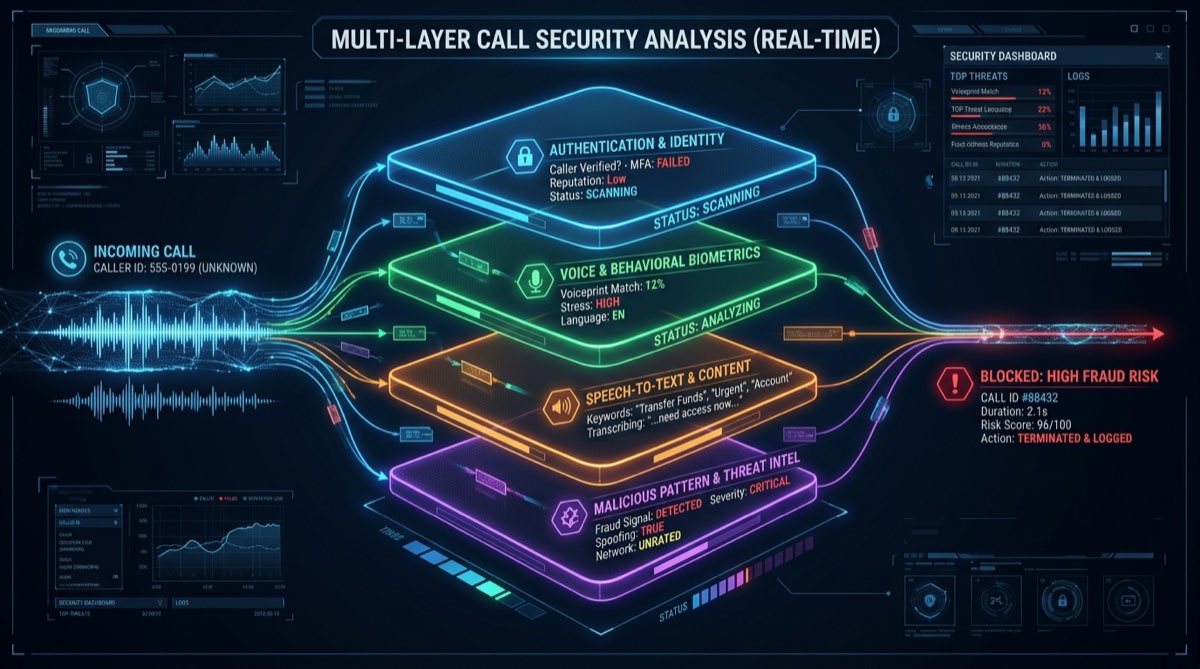
Callro's 26-layer protection system evaluates incoming phone calls across five sequential defense stages: STIR/SHAKEN cryptographic validation, carrier gateway inspection, geographic prefix velocity, lead generator heuristics, and instant SIT tone disconnect. Every check executes locally on-device in under 25ms.
How does Callro filter spoofed numbers?
Callro filters spoofed numbers using the 26-layer Gauntlet Engine that operates entirely on the device. By leveraging on-device call screening and inspecting carrier STIR/SHAKEN attestation levels, it intercepts robocalls in real time, before the screen even lights up.
What is STIR/SHAKEN verification and how does it work?
The STIR/SHAKEN protocol authenticates the caller ID to ensure the number hasn't been spoofed. Callro checks this cryptographic signature instantly as part of its Scan phase. If the caller ID does not match the origin data, the system flags the call as fraudulent and drops it instantly.
How does Callro use on-device pattern recognition?
Callro uses on-device pattern recognition to analyze the volume, frequency, and origin of calls from unfamiliar numbers without sending data to an external server. Because this analysis stays strictly on the hardware, it protects privacy while still identifying robocall behaviors like rapid successive calls from similar area codes.
How does Intelligent Network Rejection work?
When Callro identifies a scam or robocall via its 26-layer gauntlet, it rejects the call before your phone rings using Intelligent Network Rejection (INR). No audio tone is generated or played on the device. Automated dialers interpret the carrier-level disconnect signal as an unworkable number and remove it from their lists.
Why does standard carrier blocking fail to stop spoofed numbers?
Standard carrier blocking fails because it relies heavily on static, network-level blocklists that scammers bypass by constantly generating and rotating new fake local numbers. Carrier-level filters often allow calls to ring through if the number is new to their database. Callro succeeds because it processes the call on-device in real-time, actively verifying the call's technical integrity rather than relying on slow carrier network updates.
Does Callro protect data while filtering?
Yes. All filtering processes happen directly on the local device. Contact lists, call logs, and personal information are never uploaded, shared, or sold.
Key Takeaways
- Stage 1 cryptographically verifies STIR/SHAKEN attestation certificates from originating carriers.
- Stage 2 and 3 inspect VoIP gateway routes, unassigned exchanges, and rapid prefix rotation bursts.
- Stage 4 evaluates behavioral autodialer signatures without cloud database query latency.
- Stage 5 terminates spam connections cleanly at the OS level to protect personal privacy.
Frequently Asked Questions
How does Callro filter spoofed numbers?
Callro filters spoofed numbers using a 26-layer protection system that operates entirely on the device, designed to intercept calls before the screen even lights up.
What is STIR/SHAKEN verification and how does it work?
The STIR/SHAKEN protocol authenticates the caller ID to ensure the number hasn't been spoofed. Callro checks this cryptographic signature instantly as part of its Scan phase. If the caller ID does not match the origin data, the system flags the call as fraudulent and drops it instantly.
How does Callro use on-device pattern recognition?
Callro uses on-device pattern recognition to analyze the volume, frequency, and origin of calls from unfamiliar numbers without sending data to an external server. Because this analysis stays strictly on the hardware, it protects privacy while still identifying robocall behaviors like rapid successive calls from similar area codes.
How does Intelligent Network Rejection work?
When Callro identifies a scam or robocall via its 26-layer gauntlet, it rejects the call before your phone rings using Intelligent Network Rejection (INR). No audio tone is generated or played on the device. Automated dialers interpret the carrier-level disconnect signal as an unworkable number and remove it from their lists.
Why does standard carrier blocking fail to stop spoofed numbers?
Standard carrier blocking fails because it relies heavily on static, network-level blocklists that scammers bypass by constantly generating and rotating new fake local numbers. Carrier-level filters often allow calls to ring through if the number is new to their database. Callro succeeds because it processes the call on-device in real-time, actively verifying the call's technical integrity rather than relying on slow carrier network updates.
Does Callro protect data while filtering?
Yes. All filtering processes happen directly on the local device. Contact lists, call logs, and personal information are never uploaded, shared, or sold.
Protect Your Family Today
Install Callro and give your parents a phone that only rings for real people. 7-day free trial — no payment info required.