What Happens in the 26 Layers Before Your Phone Rings?
Quick Answer
Callro's 26-Layer Gauntlet Engine is an on-device telephony filtering pipeline that evaluates incoming call metadata across 26 sequential heuristics in under 25 milliseconds. It verifies STIR/SHAKEN attestation, prefix velocity, and carrier validity directly on your Android phone before your ringer sounds.
When a call hits your phone, Callro evaluates it through 26 layers of analysis in real time before your phone rings once. This happens entirely on the device. No call data is sent to a cloud server for a decision. Here's what that analysis actually looks like, in plain English.
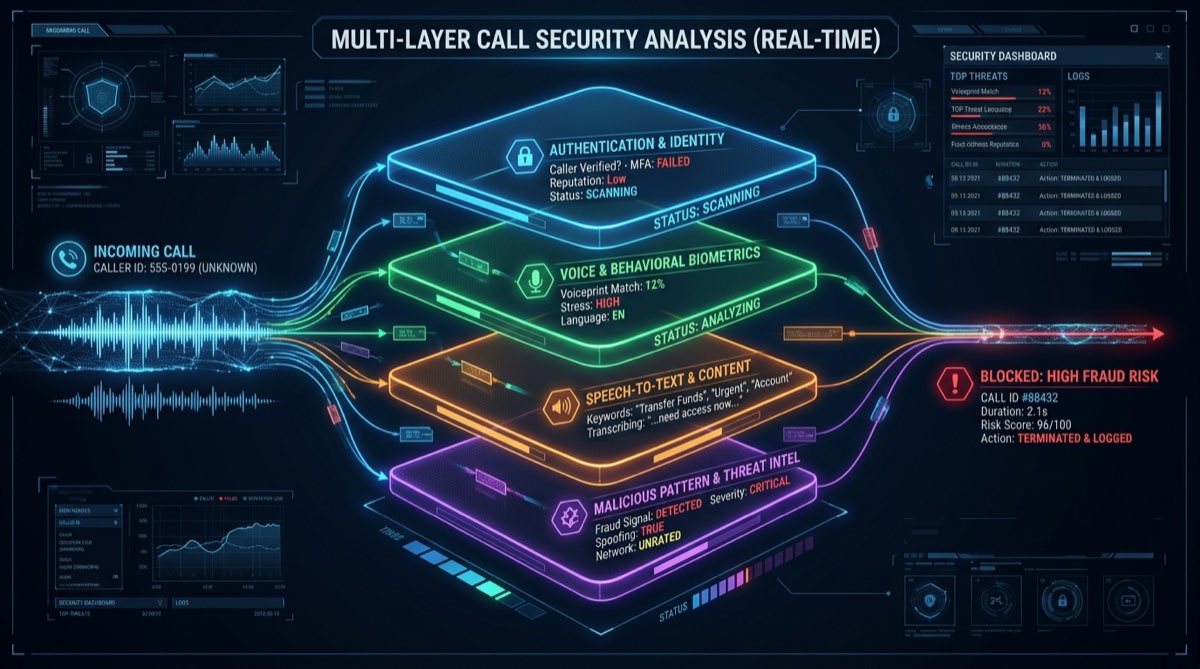
Most people think spam blocking is a database lookup — your number gets compared to a list of known bad numbers. That's step one. But the list is always weeks behind the dialers. Here's what happens in the other 25 layers.
Why "Before Your Phone Rings" Matters More Than "Labeling Calls"
Labeling (like the built-in Samsung or Google Phone features) still rings your phone and puts the burden on you to ignore it. Blocking before the ring means you never hear it. For someone getting 40 spam calls a day, this is the difference between a disrupted day and a normal one.
What Is ROLE_CALL_SCREENING? (The Android Permission That Makes This Possible)
Android 10 introduced ROLE_CALL_SCREENING — a system role that allows a designated app to intercept calls before the phone rings.
Only one app can hold this role at a time. It doesn't require contact access. It doesn't require call log access. It's the specific permission that makes on-device blocking possible.
The Categories of Analysis Callro Runs on Every Call
- STIR/SHAKEN attestation: What level did the carrier certify? (A/B/C/unsigned). We verify the cryptographic signature mandated by the FCC.
- Number reputation: Does this number appear in FTC or FCC complaint databases?
- Behavioral patterns: Is this number calling at a pattern consistent with predictive dialers in terms of timing, frequency, and volume?
- Area code analysis: Is the number neighbor-spoofing your specific prefix?
- Community signals: Anonymized, hashed signals from the Callro user base detecting new active attacks.
What Callro Cannot Do (And Why That's Honest)
Callro cannot block SMS or text spam. It cannot identify the name of an unknown caller, because we do not have a caller ID database built on uploaded contacts. We cannot guarantee zero false positives, and new robocall techniques constantly emerge which the engine takes time to learn.
Why Running This On-Device Matters for Your Privacy
The alternative to Callro's architecture is cloud processing: your call metadata (number, time, duration) is sent to a remote server, evaluated, and a decision is returned. That's how many carrier integrations work.
With Callro, your contacts, call logs, and audio never leave the device. The only external sync is downloading public database updates and returning anonymized, hashed signals — not your call data.
Key Takeaways
- The Gauntlet Engine processes all 26 verification checks locally on-device without cloud network latency.
- Heuristics evaluate STIR/SHAKEN cryptographic tokens, geographic spoof patterns, and dialer rotation rates.
- Instant disconnects emit SIT audio frequencies that prompt automated autodialers to purge your number.
- Zero user data, contact books, or call audio are ever transmitted to external servers or cloud databases.
Frequently Asked Questions
Does Callro need an internet connection to block calls?
For real-time database updates, yes. The on-device engine can evaluate calls using its local database without a live connection, but the database stays current through periodic updates.
What is STIR/SHAKEN attestation?
STIR/SHAKEN is an FCC-mandated framework that provides a digital certificate for phone calls to verify the caller's identity. It helps prevent illegal caller ID spoofing.
Can Callro block calls from unknown numbers?
Callro evaluates all unknown numbers through its 26-layer engine. It doesn't block all unknown numbers indiscriminately, but rather blocks those that exhibit spam, scam, or spoofing characteristics.
Why does Callro need to be set as the default Call Screening app?
Setting Callro as the default allows it to utilize Android's ROLE_CALL_SCREENING permission, which is required to intercept and evaluate calls before your phone actually rings.
No card required · Cancel anytime