Is It Safe to Press Buttons on Scam Calls? (Press 1 or 9)
Quick Answer
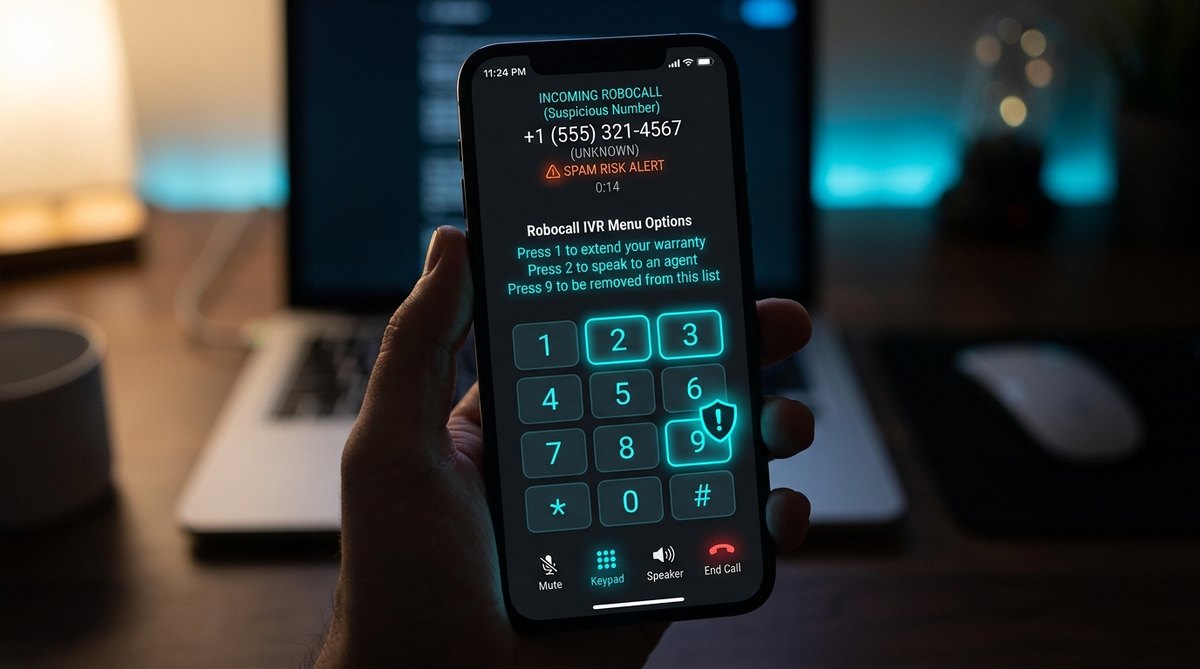
No. Pressing any button on an unsolicited robocall—even prompts claiming to remove your number—transmits a Dual-Tone Multi-Frequency (DTMF) signal that confirms an active, responsive human line. This logs your number in autodialer queues, routes you to high-pressure closers, and increases future scam calls.
Pressing any keypad button during an unsolicited robocall—even when a recorded voice instructs you to press 9 or 2 to be removed from the calling list—actively confirms that your 10-digit telephone number is monitored by a responsive human. Automated predictive dialing platforms track keypad interactions on your device. Rather than removing your number, pressing a button marks your record as verified and queues your line for aggressive follow-up campaigns.
How Predictive Dialers Interpret Keypad DTMF Tones
When you press a key on your phone during an active call, your device sends a Dual-Tone Multi-Frequency (DTMF) tone across the voice circuit. Automated call distribution systems listen continuously for these DTMF frequencies to drive branching logic in Interactive Voice Response (IVR) software.
When an autodialer detects a DTMF tone, it logs key facts: that the call reached an active telephone line, and that a person listened to the prompt and followed instructions. This converts an unverified cold lead into an engaged contact. Lead brokers package these verified numbers into targeted lists sold across overseas telemarketing networks. For more context on caller categorization, explore our telecom scam glossary.
Why the Opt-Out Prompt Is an Engagement Trap
Legitimate businesses complying with FTC and FCC regulations under the TCPA honor opt-out requests. However, illegal scam rings use opt-out prompts as deception filters. As the FTC warns in Robocalls, "Pressing numbers to speak to someone or remove you from the list will probably only lead to more robocalls."
The FTC explains the fundamental rule for identifying illegal calls: "If you hear a recorded message from someone trying to sell you something, the call is almost always illegal." In criminal campaigns, pressing 2 or 9 triggers the exact same database update as pressing 1: it validates that the phone number is monitored. The autodialer immediately reschedules the number for high-frequency calling queues. To see how these tactics appear in government impersonation calls, review our breakdown of IRS and Social Security scam calls.
What Happens When You Connect to a Live Operator
If you press 1 to confront the caller, demand removal, or express anger, the dialer transfers you to an offshore boiler room. Live agents are trained in social engineering, false urgency, and identity theft. Arguing with them does not help: any answered connection is recorded as a successful contact, ensuring your telephone number remains on active redial queues. For details on how active lines are traded, consult our guide on why spammers target active numbers.
The Standard Response Protocol for Interactive Robocalls
When an unexpected automated recording plays on your phone, follow these core rules:
- Disconnect immediately: End the call without pressing any buttons on your keypad.
- Remain silent: Do not speak words like "yes," "hello," or "stop," as speech recognition systems log acoustic responses.
- Deploy on-device screening: Review FTC call blocking guidance. When Callro blocks or silences a call, your phone does not ring.
Frequently Asked Questions
What happens when you press 1 to speak to an operator on a robocall?
Pressing 1 routes your call to a live overseas boiler room or lead-generation broker. It also logs your 10-digit number as a high-value responsive lead, significantly increasing subsequent scam calls.
Does pressing 2 or 9 remove you from a robocall list?
No. On illegal robocalls, opt-out prompts are deceptive mechanisms used to confirm human presence. Pressing 2 or 9 proves the line is monitored and results in more calls, not fewer.
What is a DTMF signal in telecommunications?
Dual-Tone Multi-Frequency (DTMF) is the telecommunications signaling standard transmitted when you press keys on a telephone keypad. Automated dialers detect these signals to execute call-routing scripts.
What should you do if an interactive voice recording asks you to press a key?
Hang up immediately without pressing any keys or speaking. Interacting in any way provides data points to the automated dialing system.
Key Takeaways
- Pressing '1' to speak or '2' or '9' to opt out transmits a DTMF tone that confirms a live human answered.
- Autodialers flag responsive numbers as premium active leads and reschedule them for repeat dialing cycles.
- Interacting transfers the call to aggressive boiler-room closers trained in identity theft and wire fraud.
- Disconnect immediately without speaking or pressing keys to avoid compounding your call volume.
Protect Your Family Today
Install Callro and give your parents a phone that only rings for real people. 7-day free trial — no payment info required.