FTC Impersonation Scams: Inside the Staged Videos
Quick Answer
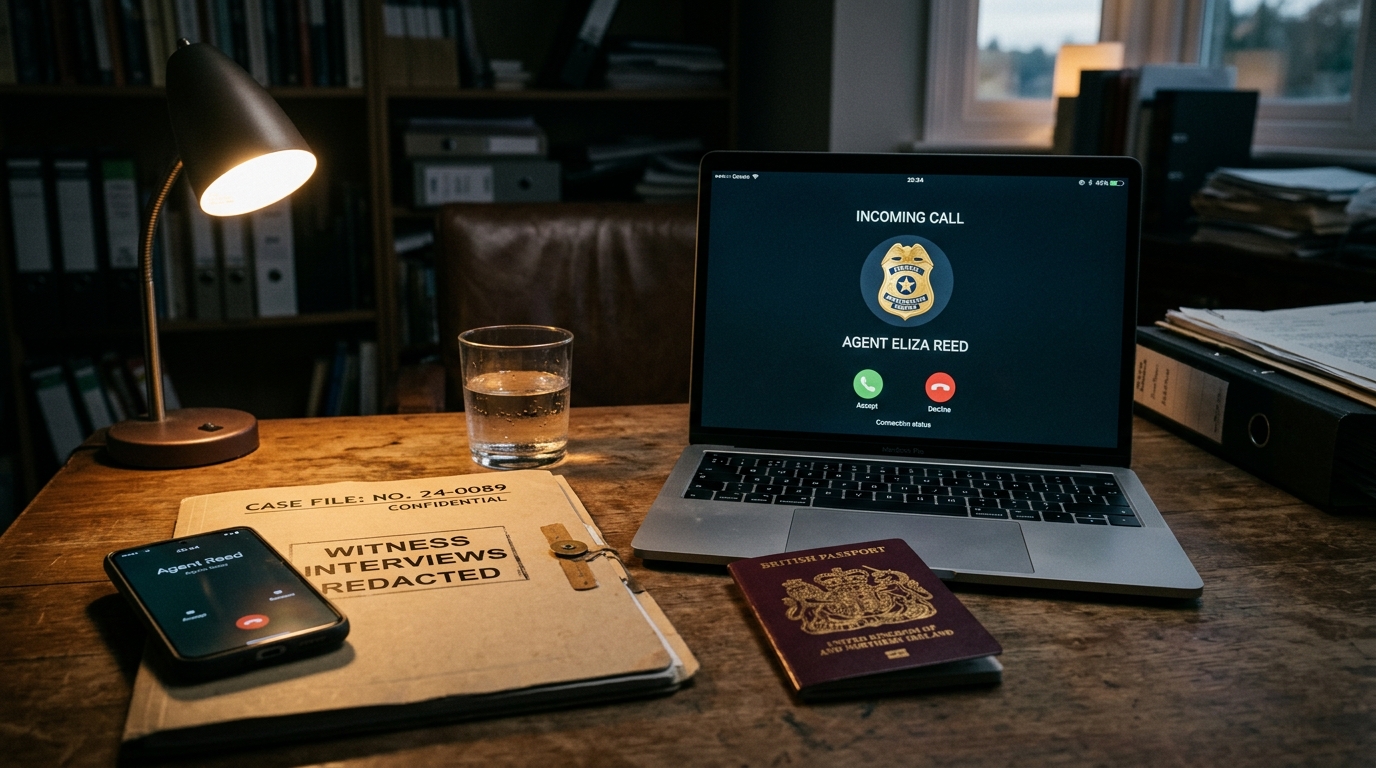
An emerging cross-border extortion pattern begins with a phone call from an imposter claiming to represent a US regulatory agency like the FTC, alleging the target's identity is tied to financial crimes. The operation quickly escalates to a live video call featuring staged interrogation rooms and actors dressed in foreign police uniforms, coercing immediate wire transfers to "secure government holding accounts."
An Emerging Two-Stage Extortion Architecture
An emerging cross-border fraud pattern combines regulatory authority impersonation with theatrical video intimidation. Unlike standard phone scams that rely entirely on voice scripts, this operation executes a calculated two-stage escalation designed to completely overwhelm the target's critical judgment.
The scheme targets individuals residing in the United States. The scam begins with an unexpected domestic phone call and culminates in a high-pressure, staged video interrogation involving actors dressed in official foreign law enforcement uniforms.
Stage 1: The Domestic Regulatory Authority Hook
The opening stage establishes an official domestic pretense. The target receives a phone call from an individual claiming to be a compliance investigator with the Federal Trade Commission (FTC), Department of Justice (DOJ), or Federal Bureau of Investigation (FBI):
- The Allegation: The caller informs the victim that a bank account, vehicle rental, or shipping container opened in their name has been seized in connection with an international money laundering or fraud investigation.
- The Identification Trap: The agent quotes partial public record data (former addresses, partial Social Security numbers, or passport details) to establish immediate credibility.
- The Escalation Bridge: The fake FTC agent claims that because the underlying criminal case is being prosecuted overseas, the victim's case is being transferred directly to foreign law enforcement investigators for immediate clearance.
As explored in our analysis of federal government imposter calls, scammers rely heavily on technical jargon, fake case numbers, and authoritative demeanor to prevent the victim from hanging up.
Stage 2: The Staged Video Interrogation
Within minutes of the initial call, the victim is instructed to download a commercial video communication app (such as WhatsApp, Telegram, or Skype) to receive an official video connection from overseas investigators. The video call is carefully staged to simulate an active police department:
- The Staged Environment: The camera displays an office environment featuring official government insignia, national flags, police crests, and individuals wearing authentic-looking police uniforms.
- The Fabricated Warrant: The "commanding officer" displays a fabricated arrest warrant, asset freeze order, or Interpol red notice bearing the victim's name, photograph, and date of birth.
- The Isolation Protocol: The victim is placed under strict "confidentiality orders," warned that informing family members, legal counsel, or local police will result in immediate detention and extradition.
This cross-border dynamic mirrors the operational structure documented in our report on transnational police impersonation schemes, where visual staging is weaponized to force psychological surrender.
The Asset Transfer Demands
Once the victim is thoroughly convinced of their impending arrest, the operators present the only supposed pathway to exoneration: financial asset verification. The victim is instructed to liquidate personal investment accounts, mutual funds, or bank balances and wire the entire sum to a "state auditing escrow account" or authorized cryptocurrency repository.
The perpetrators assure the victim that once forensic investigators verify that the funds are untainted by criminal activity, the full balance will be returned alongside an official certificate of clearance. Once the wire transfer completes, the operators sever communication immediately, leaving the victim with catastrophic financial losses.
Recognizing Government Communication Invariants
Protecting yourself and your family against complex imposter operations requires understanding strict government communication protocols:
- No Video Interrogations: No legitimate federal or municipal law enforcement body conducts official criminal interrogations or asset audits over commercial video messaging apps.
- No "Safe" Holding Accounts: Government agencies never direct citizens to transfer money to third-party bank accounts, escrow services, or cryptocurrency wallets for verification.
- Official Written Notice: Federal regulatory agencies initiate formal inquiries through certified postal mail, never through sudden outbound phone demands.
Deploying multi-layer on-device defense via Callro's 26-layer Gauntlet Engine ensures that unverified, spoofed incoming calls from international syndicates are identified and neutralized before psychological manipulation can begin.
Key Takeaways
- Two-Stage Extortion Funnel: Victims receive an initial call from a fake federal agent (FTC/SEC) before being transferred to a staged video interrogation.
- Staged Police Environments: Fraudsters wear replica law enforcement uniforms and broadcast from simulated offices displaying official government seals.
- The "Safe Federal Locker" Trap: Targets are told their accounts are linked to criminal rings and ordered to move funds into supposedly secure government accounts.
- Federal Agency Invariant: Real federal agencies and police never conduct remote video interrogations or demand fund transfers to safeguard assets.
Frequently Asked Questions
Do US federal agencies like the FTC or FBI conduct video call interrogations?
No. Federal regulatory and law enforcement agencies (including the FTC, SEC, and FBI) never conduct official interrogations, issue subpoenas, or demand financial asset verification over commercial video calling platforms like WhatsApp, Telegram, or Skype.
Why do scammers switch from a phone call to a video call?
Switching to video introduces visual intimidation. Scammers use realistic-looking police precinct backdrops, official-looking badges, and actors in police uniforms to convince the target that an active international arrest warrant exists.
What is the primary demand in an FTC-to-police escalation scam?
The operators demand that the target liquidate their financial assets and transfer the funds to a designated 'secure government holding account' or cryptocurrency wallet for forensic audit, promising the funds will be returned once their name is cleared.
Protect Your Family Today
Install Callro and give your parents a phone that only rings for real people. 7-day free trial — no payment info required.