Chinese Police Scam Calls: Inside the 4-Phase Trap
Quick Answer
A Chinese police imposter scam is a multi-phase extortion scheme where fraudsters pose as telecom carriers, delivery services, or FTC officials before transferring you to fake Chinese police officers. Scammers use psychological isolation, 24/7 video and audio monitoring, and fake arrest threats to demand large wire transfers or cryptocurrency to 'prove innocence.'
A Chinese police imposter scam is a multi-phase extortion scheme where fraudsters pose as telecom carriers, delivery services, or FTC officials before transferring you to fake Chinese police officers. Scammers use psychological isolation, 24/7 video and audio monitoring, and fake arrest threats to demand large wire transfers or cryptocurrency to "prove innocence."
Understanding How the Extortion Scheme Consists of Four Phases
The Federal Bureau of Investigation (FBI) and the Internet Crime Complaint Center (IC3) have issued formal public service advisories regarding an ongoing extortion scheme officially designated as "Chinese Police Imposters." The FBI's Philadelphia Field Office has repeatedly warned university communities in formal advisories about the severe financial and psychological harm caused by this scheme.
Federal law enforcement documents that the scheme consists of four phases:
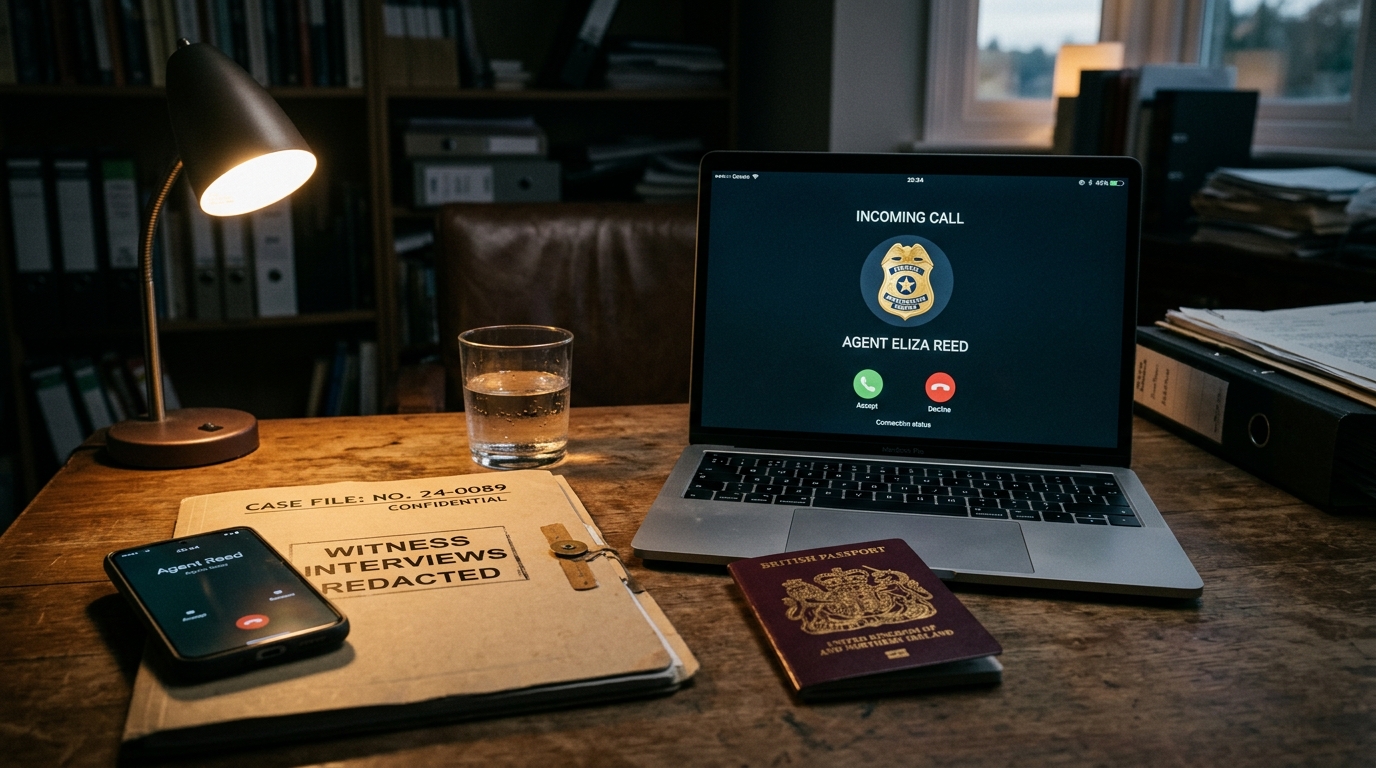
- Phase 1 — Initial Contact: The victim receives an unexpected incoming call displaying spoofed caller ID information. The caller claims to represent a major mobile carrier, a parcel delivery service (such as DHL or FedEx), a large retailer, the Chinese Embassy or Consulate, or in some variants, the U.S. Federal Trade Commission (FTC). The automated or live caller claims that a package containing contraband, a phone line linked to illegal activity, or a fraudulent transaction was flagged under the victim's name. While many telephone scams rely on indiscriminate mass-dialing (such as the high-volume campaigns explored in our guide to press-1 robocalls), this scheme uses targeted institutional pretexts aimed specifically at international visa holders.
- Phase 2 — Scare Tactics (Chinese Police Imposter): The caller offers to connect the victim directly to law enforcement to clear their record. The call is transferred to an impersonator posing as a Chinese provincial police officer or prosecutor, who appears in a realistic-looking police uniform in front of fabricated municipal police backdrops over video chat.
- Phase 3 — Surveillance of Victims: The fake officer claims the victim is implicated in a major transnational money laundering or financial crime investigation. Criminal actors direct victims to consent to 24/7 video and audio monitoring due to the alleged sensitivity of the investigation and to demonstrate their innocence. The scammer insists that strict secrecy is legally required and demands that the victim check in multiple times per day, avoid discussing the case with family or friends, and refrain from searching for case information online. In severe cases, victims are instructed to relocate to a third-party location to prevent outside interference.
- Phase 4 — Final Act (Extortion of Victims): Once the victim is completely isolated, the scammers demand that they wire significant funds or transfer cryptocurrency to designated bank accounts in China or third-party jurisdictions under the guise of "bail," "asset verification," or "clearing funds." The fraudsters threaten immediate arrest and deportation if the transfers are not completed. Multi-agency transfer theater is also common in other government imposter schemes, such as hybrid retail-to-government scams and IRS and Social Security scam call scripts.
Why the Psychological Isolation Tactics Are the Real Danger
According to FBI intelligence bulletins, the primary targets identified for this scheme are members of the U.S.-based Chinese community, particularly Chinese international students studying at American universities. Scammers exploit victims' unfamiliarity with cross-border legal jurisdictions and their desire to maintain valid student visas.
The core danger of this scheme lies in its aggressive psychological control mechanisms:
- Demanding 24/7 video and audio monitoring: Criminal actors direct victims to consent to 24/7 video and audio monitoring while the scammers keep their own cameras off, creating an intense atmosphere of constant surveillance.
- Screen-sharing under the guise of "verifying compliance": Fraudsters instruct victims to share their screens during banking transactions to ensure nobody is assisting them, capturing login credentials and verification codes on your device.
- Fabricated jurisdictional claims: Scammers tell victims that local U.S. police departments have no jurisdiction to intervene, specifically designed to deter victims from contacting campus security or local law enforcement.
What Legitimate Law Enforcement and Government Agencies Will Never Do
Real international law enforcement operations and domestic government agencies operate under strict bilateral treaties and legal standards:
- Foreign police do not execute arrests over commercial phone calls: Foreign law enforcement officers do not conduct investigations of U.S. residents via unverified phone or video calls without formal coordination with the U.S. Department of Justice and local authorities.
- No agency demands payments via wire or crypto to "prove innocence": Legitimate investigators never require targets to wire funds to foreign holding accounts or purchase cryptocurrency to clear an investigation.
- No legitimate investigator mandates 24/7 video and audio monitoring: Real law enforcement officers will never demand that a citizen or student consent to 24/7 video and audio monitoring or report daily movements over messaging apps.
What to Do If You Are Mid-Call or Targeted Right Now
If you receive a suspicious call or are currently in contact with someone claiming to be foreign police:
- Hang up and sever contact immediately: Disconnect the phone or video call, block the caller's number, and close any remote messaging channels. Do not worry about threats of immediate arrest.
- Contact campus security or local police: If you are a college student, inform your university's international student office and campus police department immediately. They can confirm that you are safe and that no foreign arrest warrant is active.
- Report the incident to the FBI: File a formal report with your local FBI Field Office or submit a detailed complaint online at IC3.gov.
- Screen incoming calls on-device: Callro's Gauntlet Engine (view Callro's on-device protection) evaluates incoming calls on-device through on-device verification — including carrier STIR/SHAKEN verification status as reported by Android, behavioral dialing patterns, and number reputation — to drop fraudulent calls before your ringer sounds.
Frequently Asked Questions
Can Chinese police arrest someone in the United States over the phone?
No. Foreign police have no legal jurisdiction to arrest individuals on U.S. soil over phone or video calls. Official international law enforcement actions require formal cooperation with the U.S. Department of Justice and local police.
Why do Chinese police imposter scammers demand 24/7 video and audio monitoring?
Scammers direct victims to consent to 24/7 video and audio monitoring to psychologically isolate victims, preventing them from speaking to family, contacting university officials, or researching the scam online.
What should international students do if they receive a call from Chinese police?
Hang up immediately. Contact your university's international student support office, notify campus police, and file a report with your local FBI field office or at IC3.gov.
Key Takeaways
- The multi-phase scam escalates from delivery parcel notices to fake Chinese consulate and police investigators.
- Actors in forged police uniforms conduct intimidating video calls and present fake arrest warrants or international red notices.
- Victims are pressured into complete isolation and ordered to wire life savings into offshore 'clearing accounts.'
- Foreign law enforcement agencies have no legal jurisdiction to interrogate US residents or demand bond wire transfers.
Protect Your Family Today
Install Callro and give your parents a phone that only rings for real people. 7-day free trial — no payment info required.