Can You Sue Telemarketers? How to Get $500–$1,500
Quick Answer
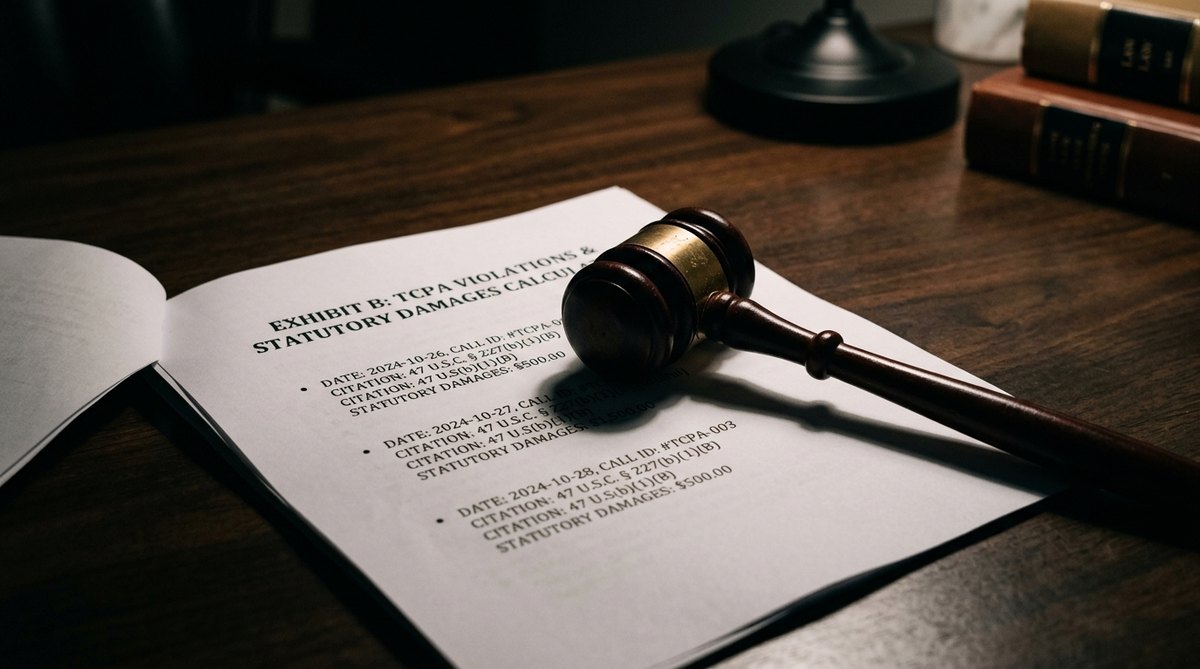
Yes. Under the Telephone Consumer Protection Act (47 U.S.C. § 227), consumers can sue telemarketers who place illegal robocalls or call numbers on the National Do Not Call Registry without consent. Statutory damages are $500 per automated call violation and up to $500 per Do-Not-Call violation, which courts can increase up to $1,500 for willful violations.
Disclaimer: This article provides general educational information regarding federal telecommunications statutes and does not constitute formal legal advice. Individuals seeking to pursue claims under the TCPA should consult a qualified consumer rights attorney.
Under the federal Telephone Consumer Protection Act (TCPA) of 1991, codified at 47 U.S.C. § 227, American consumers possess a private right of action to sue telemarketers who violate federal calling restrictions. The statute authorizes consumers to recover statutory damages of $500 for automated robocalls and up to $500 for Do-Not-Call violations, increasing up to $1,500 for willful violations.
What Telemarketing Practices Violate Federal Law Under the TCPA?
The TCPA and FTC regulations establish specific legal prohibitions on commercial telephone solicitations. Telemarketers violate federal standards when they engage in the following actions without prior express written consent:
- Calling Registry Numbers: Placing more than 1 commercial solicitation within a 12-month period to numbers on the National DNC Registry after 31 days of registration (47 U.S.C. § 227(c)(5)). As codified under 16 CFR § 1.98 (90 FR 5580), companies that illegally call numbers on the National Do Not Call Registry or place an illegal robocall face statutory civil penalties up to $53,088 per violation (as adjusted for inflation, effective January 17, 2025). Read our guide on how the National Do Not Call Registry operates.
- Unconsented Autodialed Calls: Delivering autodialed or prerecorded voice messages to wireless devices without prior written consent (47 U.S.C. § 227(b)(1)(A)). Learn how political campaign calling rules apply to mobile phones.
- Restricted Calling Hours: Placing telemarketing calls before 8:00 AM or after 9:00 PM in the call recipient's local time zone.
- Ignoring Internal Opt-Outs: Failing to maintain and respect internal, company-specific opt-out requests. For standard operational practices, review the Callro Do Not Call policy.
Statutory Damages Available Under 47 U.S.C. § 227
Federal law provides concrete statutory remedies that do not require proving out-of-pocket financial harm. Under 47 U.S.C. § 227(b)(3), a consumer or entity may bring:
"an action to recover for actual monetary loss from such a violation, or to receive $500 in damages for each such violation"
In cases where the court determines that the defendant acted willfully or knowingly, 47 U.S.C. § 227(b)(3) authorizes the court to increase the statutory damages up to 3 times the base amount—granting up to $1,500 per illegal call. For violations of the Do-Not-Call registry under 47 U.S.C. § 227(c)(5), private actions allow recovery of actual monetary loss or "up to $500 in damages for each such violation," which the court may also increase up to $1,500 if willful or knowing. Under 47 U.S.C. § 227(c)(5), it is an affirmative defense if the defendant has established and implemented, with due care, reasonable practices and procedures to effectively prevent telephone solicitations in violation of the regulations.
Evidence Needed to Document a Telemarketing Claim
To prevail in small claims court or federal district court, plaintiffs must establish an unbroken evidentiary record across key areas:
- Registration Documentation: A timestamped confirmation screenshot from donotcall.gov showing your registration date was active for at least 31 days.
- Detailed Telephone Records: Exact dates, times, caller ID 10-digit numbers, and carrier billing records verifying incoming call connections for each claim.
- Entity Identification: The legal name, business address, and registered agent of the soliciting company, obtained through sales pitches or confirmation mailings.
For definitions of telecommunications terms used in regulatory filings, consult our consumer protection scam glossary.
Enforcement Realities: Domestic Vendors vs. Foreign Rings
Private TCPA lawsuits provide a direct legal remedy against domestic entities, including solar contractors, insurance lead generators, and warranty brokers with identifiable US assets. Conversely, pursuing overseas criminal syndicates is rarely practical because they conceal their operations behind spoofed identities. To explore national enforcement patterns and complaints, see our analysis of federal robocall data trends.
While lawsuits offer legal remedies after violations occur, Callro checks burst and repeat-call patterns, neighbor-spoofing matches, number patterns, and threat databases stored on your phone (including FTC, FCC, and NANPA data). When Callro blocks or silences a call, your phone does not ring.
Frequently Asked Questions
What is the Telephone Consumer Protection Act (TCPA)?
The TCPA is a federal statute (47 U.S.C. § 227) enacted by Congress in 1991 that restricts telemarketing calls, automated telephone dialing systems (ATDS), artificial or prerecorded voice messages, and unsolicited SMS text messages.
How much money can you recover per illegal robocall?
Under 47 U.S.C. § 227(b)(3), statutory damages are $500 per violation for automated calls. Under § 227(c)(5), violations of Do-Not-Call regulations allow up to $500 in damages. If a court finds the defendant acted 'willfully or knowingly,' it may increase statutory damages up to $1,500 per call.
What evidence do you need to sue a telemarketer?
You need date and time records of each call, caller ID screenshots, carrier call logs, notes detailing the company name or product offered, and proof that your number was registered on the National Do Not Call Registry for at least 31 days.
Can you sue overseas scammers under the TCPA?
While the law applies, collecting damages from unidentified or foreign criminal syndicates is extremely difficult. TCPA private lawsuits are most effective against domestic lead generators and US-based corporate entities.
Key Takeaways
- Under 47 U.S.C. § 227, consumers can recover statutory damages of $500 per automated call violation and up to $500 per Do-Not-Call violation, tripled up to $1,500 for willful violations.
- Calling residential or wireless numbers registered on the National Do Not Call Registry for over 31 days violates federal law.
- Successful claims require verifiable documentation, including call timestamps, caller ID records, and corporate identity.
- Lawsuits are effective against identifiable domestic businesses, but collection is difficult against offshore fraud syndicates.
Protect Your Family Today
Install Callro and give your parents a phone that only rings for real people. 7-day free trial — no payment info required.