Spam Call vs Robocall vs Scam Call: The Differences
Quick Answer
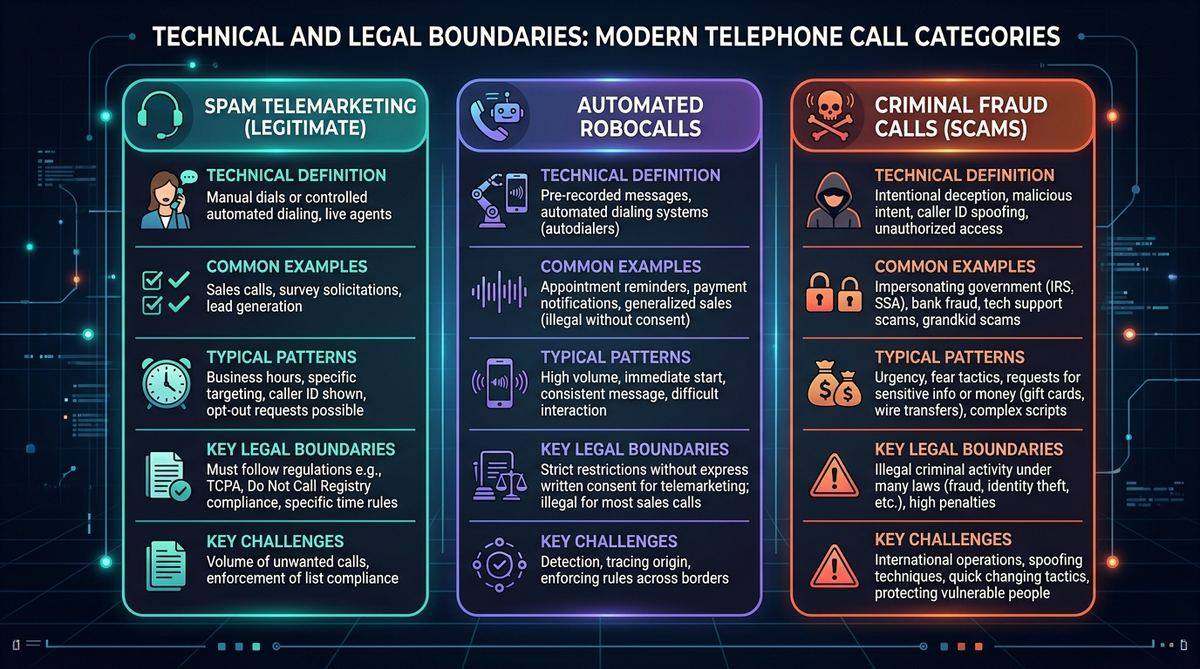
A robocall is defined by delivery technology (automated dialing with a prerecorded message); a spam call is defined by unsolicited commercial intent (telemarketing without consent); and a scam call is defined by criminal fraud (identity theft, extortion, or impersonation). While some robocalls are legal, scam calls violate federal wire fraud statutes.
While the terms "spam call," "robocall," and "scam call" are frequently used as synonyms, they describe distinct telecommunication events governed by different legal rules, technical delivery methods, and consumer risks.
What Is a Robocall? (Defined by Delivery Mechanism)
Under the TCPA enacted in 1991 and FCC regulations, a robocall is defined strictly by the technology used to place and transmit the call. As the FTC states in Robocalls, "If you answer the phone and hear a recorded message instead of a live person, it's a robocall."
Federal telecommunications law permits automated calls during emergencies or with consent: weather alerts, prescription notifications, and airline updates. However, commercial robocalls without consent are prohibited under federal regulations. As the FTC emphasizes: "If you get a robocall, and you haven't given the caller written permission to call you with robocalls, the call is illegal, period." Read the technical definition in our robocall scam glossary.
What Is a Spam Call? (Defined by Unsolicited Marketing)
A spam call is an unsolicited telephone solicitation where the consumer never granted consent to be contacted. Spam calls can be placed by live sales agents or automated dialers. Their objective is commercial sales: solar energy programs, extended auto service contracts, vacation timeshares, or insurance policies.
When telemarketers dial 10-digit numbers registered on the National Do Not Call Registry without an established business relationship after 31 days, they violate the FTC Telemarketing Sales Rule, subjecting the company to civil penalties up to $53,088 per violation (as adjusted for inflation, effective January 17, 2025) under federal law (16 CFR § 1.98). While the underlying business may sell a real product, placing the call without consent is illegal. For full regulatory context, see our guides on spam calls and legal telemarketing calls.
What Is a Scam Call? (Defined by Criminal Intent)
A scam call is an outright criminal operation aimed at stealing financial funds, banking credentials, or personally identifiable information (PII). Unlike lawful businesses engaging in improper marketing, scam syndicates violate federal wire fraud statutes.
Common fraud schemes documented by the FTC in Phone Scams include widespread categories:
- Government Impersonator Schemes: Fake agents claiming to represent the IRS, Social Security Administration, or law enforcement demanding immediate payment.
- Financial Phishing Alerts: Fraudulent messages claiming your bank card has been suspended or compromised.
- Family Emergency Impersonation: Impersonating relatives claiming urgent bail money or medical expenses.
How Modern Call Screening Distinguishes Legitimate Calls
Fraudulent callers routinely use neighbor spoofing to display local 10-digit phone numbers on caller ID displays. To prevent these intrusions, on-device call screening evaluates incoming calls before your ringer activates.
On Android 10 and newer, Callro reads the carrier's STIR/SHAKEN verification status (Passed, Failed, or Unverified) as reported by Android across on-device protection. Screening evaluates incoming calls locally. Callro does not request access to your contacts, your phone's call log, or your microphone.
Frequently Asked Questions
What is the legal definition of a robocall?
Under FCC regulations and the TCPA of 1991, a robocall is any telephone call delivered using an automated telephone dialing system (ATDS) or an artificial or prerecorded voice message, regardless of commercial intent.
Are all robocalls illegal under federal law?
No. Robocalls from legitimate entities — such as flight delay notices, prescription refill reminders, school closing alerts, and political campaigns — are lawful under specific FCC exemptions.
What makes a call legally classified as a scam?
A scam call involves deliberate criminal misrepresentation, such as impersonating the IRS, promising fraudulent debt forgiveness, or stealing financial information, which violates federal wire fraud statutes.
How do telephone carriers distinguish spam from scam calls?
Carriers use network analytics and STIR/SHAKEN verification status to label calls as 'Spam Likely' (unwanted marketing) or 'Fraud Alert' (high-probability criminal spoofing).
Key Takeaways
- Robocalls are defined by automated delivery; spam calls by unconsented marketing; scam calls by criminal deception.
- Lawful robocalls include flight alerts, prescription reminders, and emergency public announcements.
- Commercial telemarketing to numbers on the National Do Not Call Registry violates the FTC Telemarketing Sales Rule with substantial statutory civil penalties per violation.
- On-device call screening identifies spoofed fraud calls on-device before the smartphone begins ringing.
Protect Your Family Today
Install Callro and give your parents a phone that only rings for real people. 7-day free trial — no payment info required.