AI Can Now Clone Your Grandchild's Voice in Seconds. Here's How the Grandparent Scam Works in 2026.
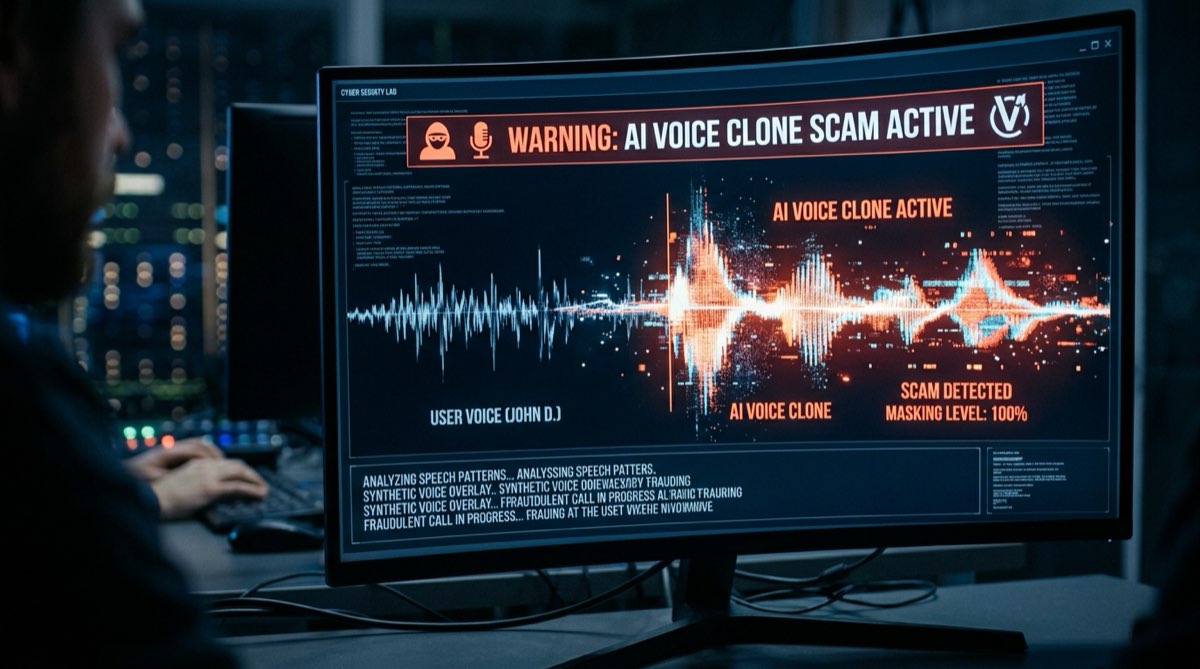
Scammers can now clone a family member's voice from a short audio sample — a social media video, a voicemail, a public recording. They use it to impersonate a grandchild in fake emergency calls. The FBI has confirmed this technique is being used in grandparent scams across the United States (IC3 PSA Nov 2023). Here is how the scam works and how to verify whether the call is real before sending money.
Quick Answer
AI voice cloning scams use brief audio clips scraped from social media to generate realistic voice replicas of children or grandchildren. Scammers call older relatives claiming the family member is jailed or hospitalized and urgently requires bail or medical funds via wire transfer.
When I was running a 100-agent outbound call center, the most effective scripts always created a sense of urgency and panic. The classic grandparent scam has always relied on this, but AI has taken it to a frightening new level. Scammers no longer have to hope you won't recognize the voice on the other end of the line—they simply clone it.
What Is the Grandparent Scam? (Before AI Made It Worse)
In the classic version of the grandparent scam, a caller impersonates a grandchild, claims to be in an emergency situation like a hospital or jail, and asks for money to be sent immediately by wire transfer or gift card. According to the FTC (consumer.ftc.gov), this tactic has been effective for years because seniors often don't hear younger family members' voices perfectly over a distorted phone connection, especially when panic sets in.
How AI Voice Cloning Changed Everything
In the modern version of the scam, the caller uses a highly accurate clone of the grandchild's voice generated from easily accessible audio, like a public social media post or a voicemail greeting. The grandparent hears what sounds exactly like their grandchild, making the emergency seem completely authentic.
The FBI's Internet Crime Complaint Center (IC3) has issued warnings about this very tactic (IC3 PSA I-120324-PSA, Dec 2024), noting that AI-generated audio is being used to bypass initial suspicion and immediately establish credibility.
The Script They Use After the Voice Hook
After establishing credibility with the cloned voice, the script almost always includes a demand for secrecy. You might hear: "Grandma, please don't tell Mom and Dad — I'm embarrassed." This secrecy request is a massive red flag.
Often, the scammer will then hand the phone to a second person pretending to be an authority figure—like a lawyer, a police officer, or a bail bondsman—who will calmly instruct you on how to send payment, usually insisting on untraceable methods like wire transfers or gift cards.
How to Verify if the Call Is Real
The most effective defense against this scam is preparation and verification. The AARP (aarp.org) and federal authorities recommend the following steps:
- Establish a family safe word now. Agree on a specific word or phrase known only to your family. If an emergency call comes in, ask for the safe word.
- Hang up and call directly. End the call immediately and dial your grandchild's known, saved phone number. Do not hit "redial" or call back the number that just called you.
- Verify with another family member. Call the grandchild's parents or another close relative to confirm their whereabouts.
Why Blocking the Number Doesn't Work for These Calls
Grandparent scams are socially engineered, targeted attacks. Each call typically comes from a newly spoofed number, meaning traditional blocklists that rely on blocking known bad numbers are entirely ineffective.
To stop these calls, the defense must target the behavioral pattern of the dialing system, not the number itself. Callro evaluates the call's connection behavior and origin patterns to intercept automated systems before the call connects, providing a layer of protection that doesn't rely on playing whack-a-mole with spoofed numbers.
Frequently Asked Questions
Can AI really clone a voice from a short recording?
Yes. Current AI voice synthesis tools can generate convincing voice clones from short audio samples. The FBI issued a public warning (IC3 PSA I-120324-PSA, December 2024) that criminals are using AI-generated voice content to facilitate fraud, noting AI reduces the time and effort needed to deceive targets.
What is a family safe word and how do we set one up?
A family safe word is a specific word or phrase known only to your family members. If someone calls claiming to be a family member in an emergency, ask for the safe word. Choose something memorable but not easily guessed from social media.
If I already sent money to a grandparent scammer, what do I do?
Contact your bank or the gift card issuer immediately to report the fraud and attempt to stop the transaction. Then file a report with your local police and the FBI's Internet Crime Complaint Center at ic3.gov.
Does Callro block grandparent scam calls?
Callro evaluates each incoming call using signals such as the carrier's STIR/SHAKEN verification status (where Android provides it), and stops calls it flags as likely spam from ringing your phone.
Key Takeaways
- Generative AI audio models can clone speech timbre, pitch, and accent from short public video or voice clips.
- Scammers create synthetic panic scenarios (arrests, car crashes) to bypass rational verification.
- Families should establish an offline 'safe word' to verify identity during unexpected crisis calls.
- Screening unknown numbers prevents AI voice cloning robocallers from reaching seniors in the first place.
Stop AI Scams Before They Ring
Callro analyzes call behavior and STIR/SHAKEN attestation to intercept spoofed robocalls before your phone even rings. Try it free for 7 days — no credit card required.